


In the 30 years since its initial theatrical release, Joel and Ethan Coen’s comedic thriller, “Fargo,” has become so synonymous with Frances McDormand’s Oscar-winning lead performance that it’s startling to remember McDormand doesn’t appear until about halfway through the film. As the blunt but sweet small-town police chief, Marge Gunderson, McDormand shows up only when the audience is up to their eyeballs in snowy subterfuge. First, the Coens submerge us headfirst into the cold netherworld of a Minnesota winter, where criminals hope that a dusting of fresh, frosty powder will cover their tracks.
Despite her occupation, Marge embodies the spirit of “Minnesota nice” — the phrase used to describe the overly polite, friendly and even-tempered manner of Minnesota residents.
Car salesman Jerry Lundegaard (William H. Macy) is up to his eyeballs in bad loans. When he’s not strong-arming unsuspecting customers into hidden upcharges for their cars, he’s trying to gain some control in his meager, unsatisfied life. Jerry uses his “you-betcha” Midwestern accent to disguise his discontent, but beneath his charlatan smile lurks a rotten, greedy soul. When he bungles a small-time plot to have his own wife kidnapped so he can collect the ransom — sending the lowlife con men Carl (Steve Buscemi) and Gaear (Peter Stormare) on the lam with a hostage and two dead bodies in their wake — Jerry’s life unravels. For as much has been said about the Coens’ depiction of this seedy Minnesotan underbelly, it shouldn’t be forgotten that they’re just as quick to flip it around, reminding viewers that good coexists with evil with a narrative device as simple as a phone call. Stirred from her sleep before the sun rises, the seven-months-pregnant Marge rises from bed, eats some eggs lovingly prepared by her husband, Norm (John Carroll Lynch), and gets to work.
Sure, this is Marge’s job, but it’s also her joy. She’s dedicated to keeping her community closely knit and protected. And while this image of a police chief is at odds with the much more varied and often insidious, violent truths of police work, Marge is a character torn right out of a Midwestern reality. Despite her occupation, Marge embodies the spirit of “Minnesota nice” — the phrase used to describe the overly polite, friendly and even-tempered manner of Minnesota residents. Although some have decried Minnesota nice as a myth or a tourism marketing tactic, I can attest that this stereotype has strong roots in reality. The state is the kind of place where small talk about the weather turns into a half-hour conversation about life; a place where citizens greet or wave to strangers while driving or walking past them. And though, like most of America, the rise in antisocial, self-obsessed conservatism fueled by Donald Trump and his cronies has hampered this lifestyle, it still persists today.
(Gramercy Pictures/Getty Images) William H. Macy as Jerry Lundegaard in “Fargo,” 1996
There’s no more pertinent example of that tenacity than what we’ve seen in Minneapolis throughout the first month of 2026, where violent acts of domestic terrorism perpetrated by ICE have been met with radical bravery from Minnesota residents looking out for their neighbors. In the wake of the murders of Renee Good and Alex Pretti by ICE officials, Minneapolis citizens have courageously defied ICE’s promises of brutality, risking force, disappearance and death to protect their city and its inhabitants. They’ve cooked, cared and crusaded for their city and its people, culminating in Minneapolis’ largest general strike since the city joined San Francisco and Toledo in pro-union strikes in 1934, all to show the world what’s possible when we come together. That this valiant display coincides with the anniversary of the Coens’ landmark film only further confirms the perennial relevance of “Fargo.” But it’s not just Minnesota nice that the Coens got right; it’s the terrifying depiction of how quickly those craving control can enact their power, making “Fargo” a perfect mirror of diverging human nature in our most volatile states.
Want more from culture than just the latest trend? The Swell highlights art made to last.Sign up here
“Fargo” begins with a title card that swears the film is based on a true story. The film’s events allegedly took place in 1987, and names have been changed at the request of the survivors. This is a clever lie that the Coens made up to sow intrigue among viewers, which Joel Coen — who directed the film but co-wrote alongside Ethan Coen — admitted to in 2015. But, in some ways, the story is completely true. While the crimes that happened in the film may not have actually happened, the personalities of the fictional parties involved may as well be yanked from real-life Minnesotans. There are small-town cops who manage to maintain their integrity despite their jobs, scoundrels who hang out at bars on the side of town closest to the highway and plenty of civilians who are intent on doing the right thing. In Minnesota, ethics go hand-in-hand with good manners. They’re the core values of a real Midwesterner, who doesn’t leave a store, restaurant or party without a hearty thank-you and a smile.
Violent acts of domestic terrorism perpetrated by ICE have been met with radical bravery from Minnesota residents looking out for their neighbors.
With such vividly realized characters, the Coens portray a truth far larger than the crimes they purport to retell. “Fargo” maps a decent person’s quick and steady moral decline, making sure to home in on the many opportunities Jerry has to rectify the mess he’s created. After years of being made to feel like a bumbling fool by his wealthy father-in-law, Wade (Harve Presnell), Jerry eventually succumbs to the role someone else has written for him. There is no modest, wholesome attempt at going out on his own to make a life beyond what marital destiny provided. Instead, Jerry takes every shortcut he can without considering the ethical fine print, aligning himself with Carl and Gaear and corrupting his soul in the process.

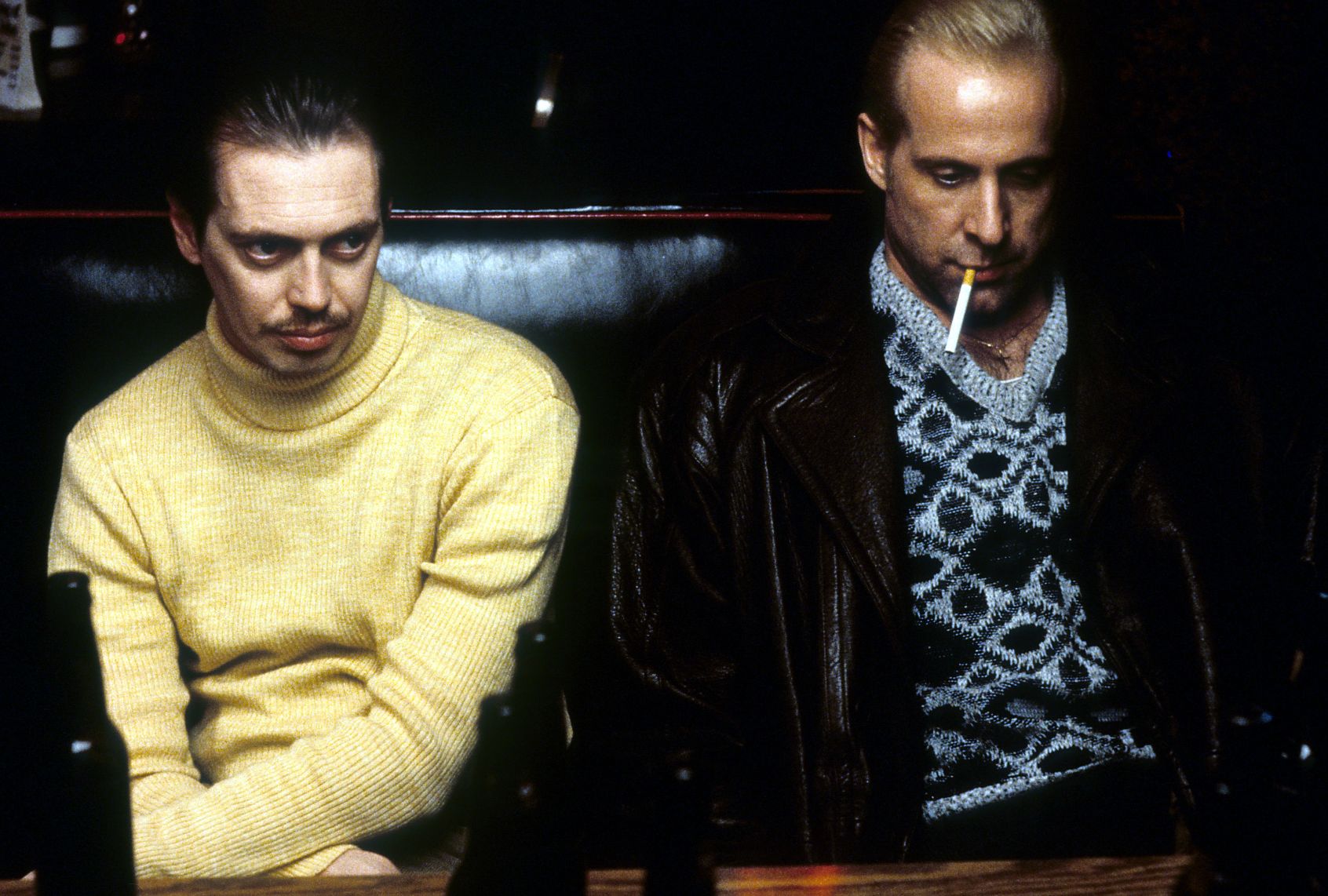
(Gramercy Pictures/Getty Images) Steve Buscemi as Carl Showalter and Peter Stormare as Gaear Grimsrud in “Fargo,” 1996
Jerry wants power, Carl wants cash, and Gaear wants the chance to enact thoughtless violence at the drop of a hat. Roll these three nefarious motivations into one, and you’ll come up with the profile of the average ICE agent, who relishes the chance to light the world on fire and laugh while it burns. Recent reports of ICE agents joking about Renee Good’s death and defacing her memorials aren’t at all unlike the way Carl and Gaear treat Jerry’s wife, Jean (Kristin Rudrüd), in captivity, howling with laughter as she tries to escape them, barefoot in the snow.
These scenes were never easy to watch; the Coens’ images of abject violence in and around Minneapolis take on an eerie new relevance 30 years on — but so does their portrait of Midwestern benevolence, depicted in Marge and those in her orbit. Marge moves about the world with a distinct compassion. She’s sympathetic and considerate, making sure to stop on the way to the station to pick up some nightcrawlers for Norm’s ice fishing. Norm, quiet and caring as he is, surprises his wife at the station with some lunch. They make a trade: a bag of live earthworms for a bag of Arby’s. As disgusting as it is, it’s love. And by practicing those little acts of love with each other every day, they make their little part of Minnesota all the more bright, even in the perpetually overcast winter.
When Marge’s case makes the news, leading her to reconnect with an old friend from high school, Mike Yanagita (Steve Park), Marge makes sure they meet up at one of the best places for lunch in town. (It is, of course, the restaurant at the local Radisson hotel — the site of countless “upscale” Sunday brunches of my youth.) When Mike makes an unexpected pass at her, Marge responds with grace, not malice. And when she later finds out that Mike’s spent his adult life struggling with mental illness, Marge moves forward with a renewed commitment to acknowledge how fortunate she is to have a small but meaningful, happy life.
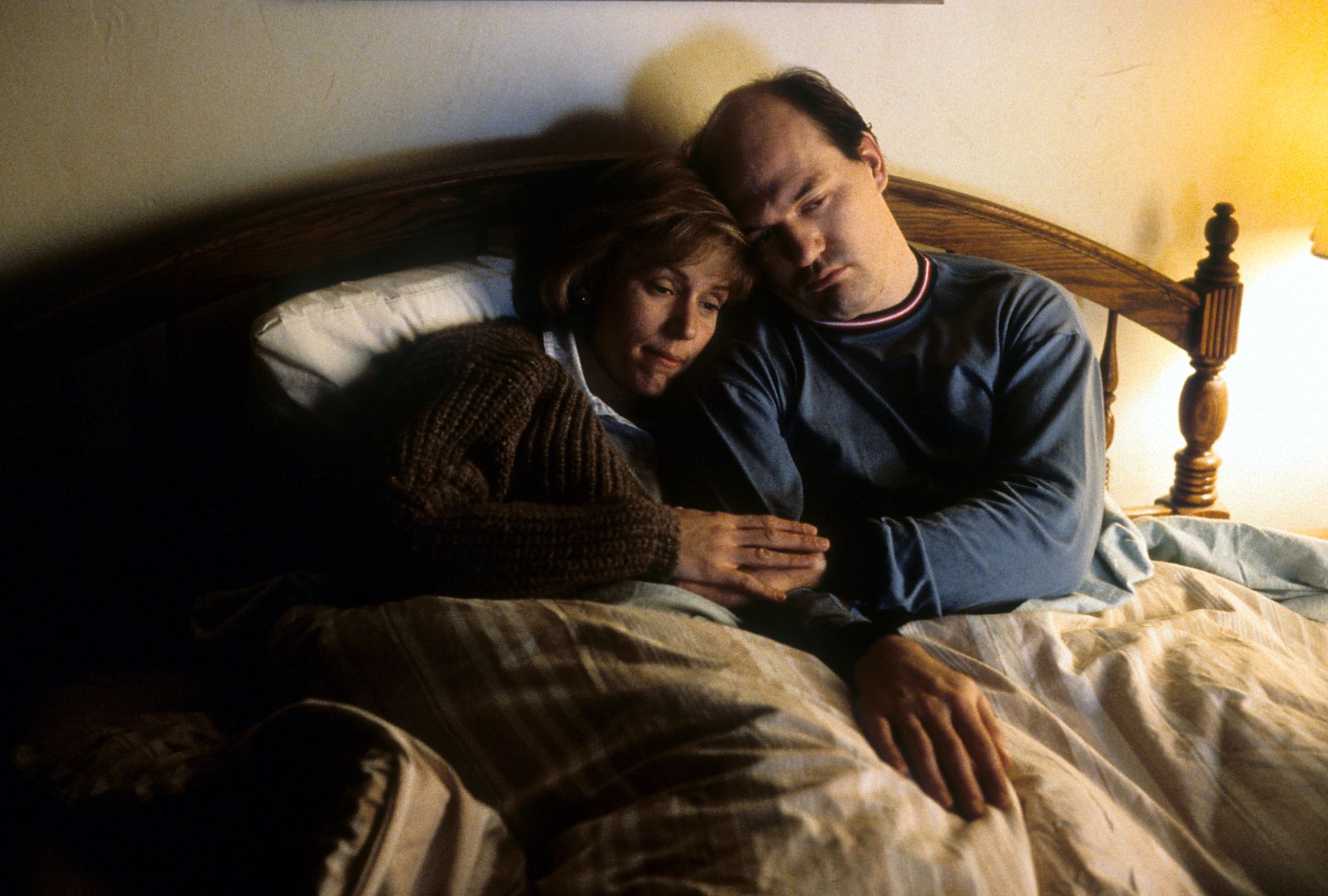
(Gramercy Pictures/Getty Images) Frances McDormand as Marge Gunderson with John Carroll Lynch as husband Norm in “Fargo,” 1996
It’s that type of benevolence that fuels Minnesota nice, and what shatters it. In “Fargo,” the Coens brilliantly and plainly illustrate how people raised in an area known for its quote-unquote niceness act when they feel cheated by life, and how susceptible they are to evil compared to those who make their own comfort. When you grow up and live in a place that’s famous for its quality of life and caring residents, every bit of unhappiness can feel all the more magnified. Without the proper care, it can become impossible to reconcile and send anyone down a dark path, away from their core humanity. That’s partially why seeing the residents of Minneapolis come together to support their neighbors is so affecting: Minnesotans know the power of community. Because cruelty feels so unfitting for a place like Minnesota — and because they’ve seen it spread so rapidly over the last decade — they have a keen awareness that the soul must be nurtured to maintain its purity.
In the end, Marge gets her guy, but not without some casualties and gruesomeness along the way. To her, it’s incomprehensible. “There’s more to life than a little money, you know,” she tells Gaear once he’s safely tucked into the back of her squad car. “Don’t you know that? And here you are, and it’s a beautiful day. I just don’t understand it.”
Spoken with earnest confusion, McDormand’s line pierces the heart. There’s no way to make sense of all of the horrific things we’ve witnessed and endured in the last month alone. The violence feels counterintuitive to human nature — and specifically the nature of Minnesotans. That such evil can be allowed to exist and spread is impossible to accept. But what’s encouraging is that Minnesotans aren’t accepting it. Like Marge, they refute brutality and rally against it. They won’t stand for it. Marge’s inability to comprehend the motivation behind these crimes is her greatest asset. Her optimism in the face of corruption keeps her going. And when she climbs into bed next to the person she loves, and receives that love right back, she remembers that a little Minnesota nice can go a very long way.
Read more
from Salon’s culture newsletter, The Swell