

Nicole Maccalla with son Sebastian Maccalla, 18, and daughter Ande Jaye Maccalla, 12, outside their home in Altadena, California, on December 29, 2025.Stella Kalinina/Guardian
This story was originally published by the Guardian and is reproduced here as part of the Climate Desk collaboration.
One year on from the Eaton Fire, long after the vicious winds that sent embers cascading from the San Gabriel mountains and the flames that swallowed entire streets, a shadow still hangs over Altadena.
Construction on new properties is under way, and families whose homes survived the fire have begun to return. But many are grappling with an urgent question: is it safe to be here?
The fire upended life in this part of Los Angeles county. By the time firefighters brought it under control, 19 people were dead, tens of thousands displaced and nearly 9,500 structures destroyed, primarily in Altadena but also in Pasadena and Sierra Madre.

The flames incinerated many older homes and businesses filled with lead paint and asbestos. They showered the community with toxins, leaving tall piles of ash and unseen traces of heavy metals in the soil and along and inside standing structures. Research has indicated some hazards remain even after properties have undergone remediation, the clean-up process that is supposed to restore homes and ensure they are safe to occupy.
As Altadena fights to return, residents—some eager to stay in the community and others who simply can’t afford to go anywhere else—are facing immense challenges while trying to rebuild their lives and come back home.
Official information about the health risks was limited early on and those returning often only learned about the dangers as they went. Some people have developed health concerns such as migraines and respiratory issues. Many are still battling their insurance companies to fully cover their costs, and make certain their homes are habitable.
Their predicament highlights the increased dangers that come with urban fires, and shows how Altadena has come to serve as a sort of living laboratory with scientists and residents learning in real time.
Nicole Maccalla, a data scientist, and her family moved back into their Altadena home over the summer after their property underwent an extensive cleanup process, but their air purifiers still register high levels of particulate matter, heavy sediment appears when they vacuum and when it rains the distinctive smell from the fire returns.
“The toll of displacement was really high on my family. And I just had to move home and try [to] mitigate risk and keep fighting the good fight,” she said. “There’s always that back-of-your-mind concern: Did I make the right choice? But I also don’t have other choices.”
Early on in those first careening hours of the fire, as thick smoke and ash fell like snow over her yard, Dawn Fanning was sure her home would not be spared. The wind was blowing from the fire straight to the Spanish bungalow the producer shared with her adult son, and it seemed there was no way to stop it.
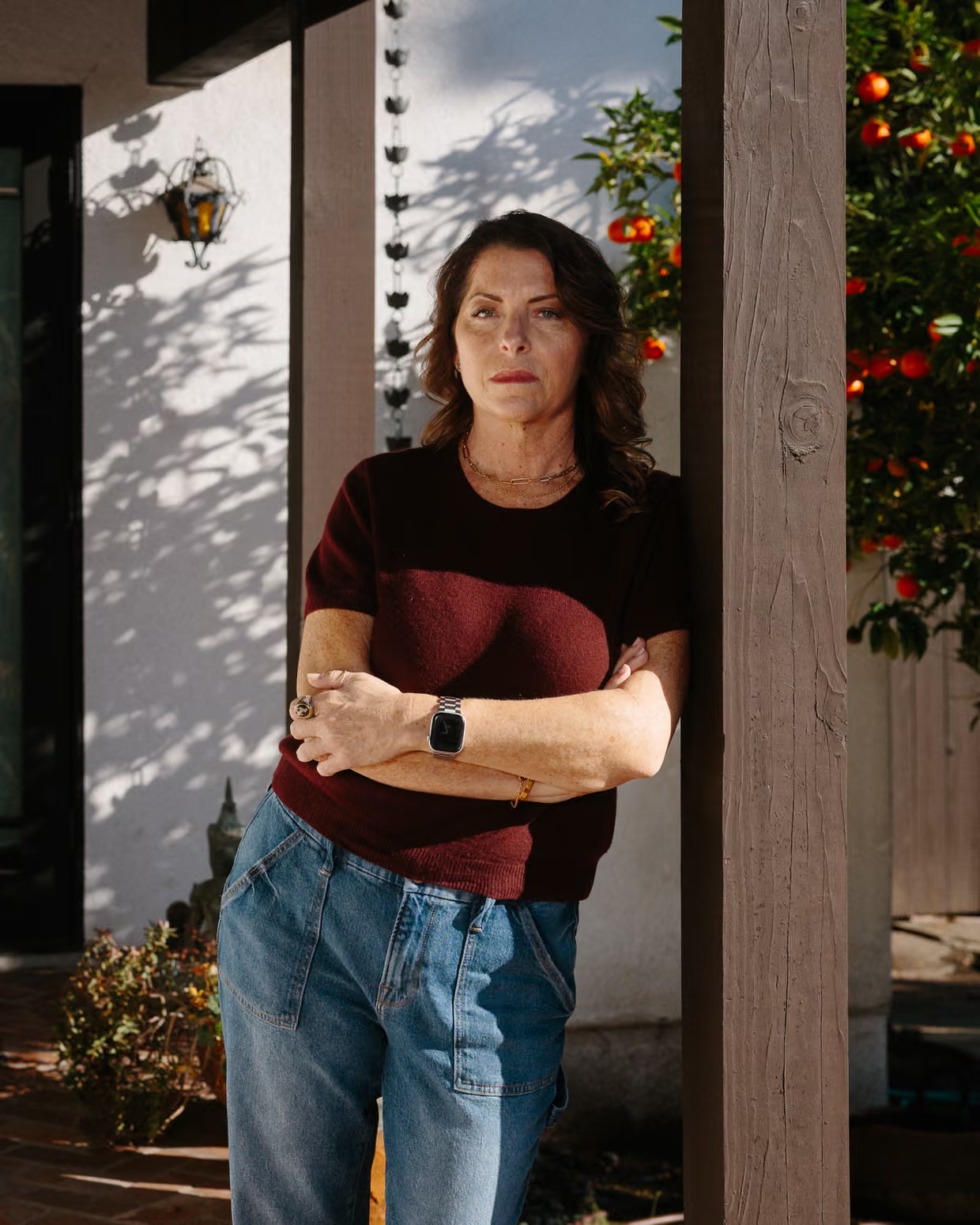
Fanning’s home, miraculously, escaped the flames. But, while the stucco structure was intact—clothes still hanging undisturbed in her closet and her son’s baby photos packed carefully in bins in the garage—it hadn’t been unscathed either. Virtually nothing in Altadena was.
“It’s dusty and there’s piles of ash in the windowsills and on the floor. At first glance, it doesn’t look any different,” Fanning said. “Your house looks the same—but it’s not. There’s toxicity in your attic and in your crawlspace and on your mattresses and on all the things.”
Confused and frustrated with the local government’s handling of health concerns, Maccalla and Fanning joined other fire survivors to form Eaton Fire Residents United in hopes of ensuring the impacted areas recover safely. The community group is developing testing and remediation guidelines, gathered hygienic testing reports of hundreds of homes, and advocated for fire survivors and workers.
“When she awoke at 3 a.m., the blaze had formed a horseshoe shape around her house, and smoke filled the room.”
“There [have been] huge threats to the health and safety of residents, children in schools, elderly and immunocompromised, workers that are coming into this area that are being exposed to hazards in the workplace,” Maccalla said. “We’re still trying to work on that and get the protections people need.”
Barely 15 miles north-east of downtown Los Angeles, Altadena at the start of last year was home to some 43,000 people, many lured by the affordable home prices, proximity to the mountains and bucolic feel. It has long been one of the most diverse cities in the region with a thriving Black community that began to grow during the great migration.
In the early evening on January 7 2025, Fanning, who had lived in her home in the area for two decades, had a feeling she couldn’t shake that something could go very wrong. There were treacherous winds that forecasters warned posed a serious fire risk. Already, a fire was spreading rapidly on the other side of the county in the Pacific Palisades, where frantic residents were trying to evacuate and firefighters were clearing the area.
Some 35 miles away, Fanning and her son were watching coverage of the unfolding fire while readying their property. Then came an alert—not from officials—but from a local meteorologist who was telling his followers to get out now. Fanning spotted flames several blocks away and she and her son decided it was time to leave.
A few miles to the east, Rosa Robles was evacuating with her grandchild in tow, leaving her husband and adult children. She wanted them to go—but they were protecting the home. Armed with garden hoses, they tried to save the residence and the other houses on their block. Sometimes the wind was so strong it blew the water back in their faces, Robles said.
Maccalla’s power had gone out that morning, and she and her children were sitting around watching the TV drama Fire Country on an iPad in the dark when they got the call about the fire. It seemed far away at the time, Maccalla recalled, and she felt prepared as a member of a community emergency response team.
They got out lamps and began packing in case they needed to leave. She set alarms hourly to monitor the progress of the fire while her children slept.
When she awoke at three, the blaze had formed a horseshoe shape around her house, and smoke filled the room. The family evacuated with their two dogs and two cats.
Tamara Artin had returned from work to see chaos on the street, with fierce winds and billowing smoke all around the house she rented with her husband. Artin, who is Armenian by way of Iran and has lived in Los Angeles for about six years, always loved the area. She enjoyed the history and sprawling green parks, and had been excited to live here.
Now the pair was quickly abandoning the home they had moved into just three months earlier, heading toward a friend’s house with their bags and passports.
Fanning and her son had gone to a friend’s home too. As they stayed up late listening to the police scanner, they heard emergency responders call out addresses where flames were spreading. These were friends’ homes. She waited to hear her own.
“We were worried, of course, because we were inhaling all those chemicals without knowing what it is.”
In the first days after the fire began, the risk remained and there was little help available with firefighting resources spread across Los Angeles. Maccalla and her son soon returned to their property to try to protect their home and those of their neighbors.
“I was working on removing a bunch of debris that had flown into the yard and all these dry leaves. I didn’t know at the time that I shouldn’t touch any of that,” she said.”
The devastation in Altadena, as in the Palisades, was staggering. Many of the 19 people who died were older adults who hadn’t received evacuation warnings for hours after people in other areas of town, if at all.
Physically, parts of Altadena were almost unrecognizable. In the immediate aftermath of the fire, bright red flame retardant streaked the hillsides. Off Woodbury Road, not far from where Robles and Artin lived, seemingly unblemished homes stood next to blackened lots where nothing remained but fireplaces and charred rubble—scorched bicycles, collapsed beds and warped ovens. The pungent smell of smoke seemed to embed itself in the nose.
Robles would sometimes get lost in the place she had lived her whole life as she tried to navigate streets that had been stripped of any identifiable landmarks. Fire scorched the beloved community garden, the country club, an 80-year-old hardware store, the Bunny Museum and numerous schools and houses of worship.
Artin and her husband returned to their home, which still stood, after a single night. They had no family in the area and nowhere else to go—hotels were packed across the county. For nearly two weeks they lived without water or power as they tried to clean up, throwing away most of their furniture and belongings, even shoes, and all of the food in the fridge and freezer.
“We were worried, of course, because we were inhaling all those chemicals without knowing what it is, but we didn’t have a choice,” Artin recalled.
As fires burn through communities, they spread particulate matter far and wide, cause intense smoke damage in standing structures and cars, and release chemicals even miles beyond the burned area.
After one round of remediation, “six out of 10 homes were still coming back with lead and or asbestos levels that exceeded EPA safety thresholds.”
When Fanning saw her home for the first time, thick piles of ash covered the floors. She was eager to return, but as she tried to figure out her next steps, reading scientific articles and guides, and joining Zoom calls with other concerned residents, it was clear she needed to learn more about precisely what was in the ash. Asbestos was found in her home, meaning all porous items, clothing and furniture, were completely ruined.
“You can’t wash lead and asbestos out of your clothing. I was like, OK, this is real and I need to gather as much evidence [as I can] to find out what’s in my house.”
In Altadena, more than 90 percent of homes had been built before 1975 and likely had lead-based paint and toxic asbestos, both of which the EPA has since banned, according to a report from the California Institute of Technology. All sorts of things burned along with the houses, Fanning said: plastic, electric cars, lithium batteries. “The winds were shoving this into our homes,” she said.
The roof on Maccalla’s home had to be rebuilt, and significant cleanup was required for the smoke damage and layers of ash that blanketed curtains and beds.
Despite these concerns, residents grew increasingly frustrated about what they viewed as a lack of official information about the safety of returning to their homes. Many also encountered pushback from their insurance providers that said additional testing for hazards, or more intensive remediation efforts recommended by experts, were unnecessary and not covered under their policies.
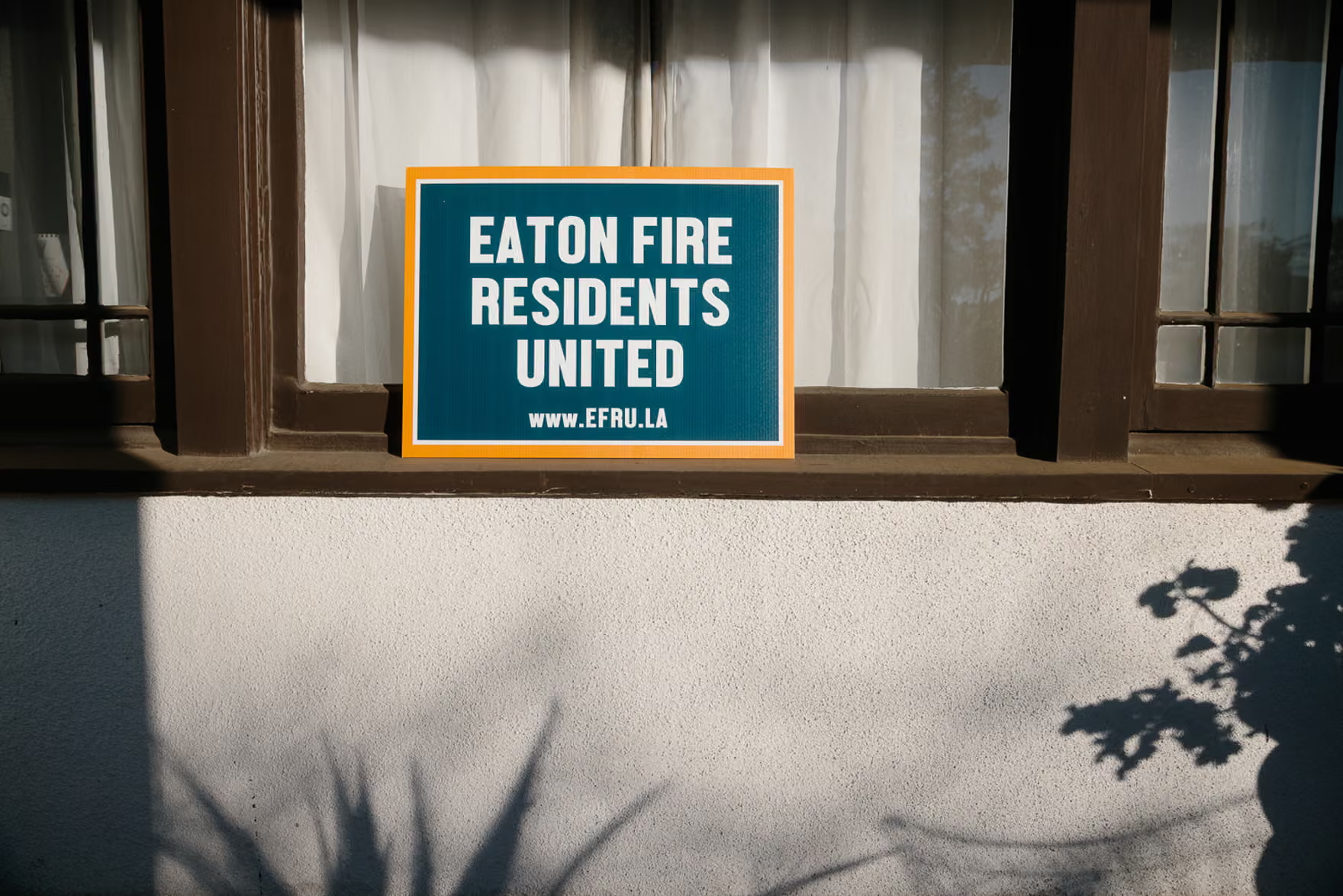
So earlier this year a group of residents, including Fanning and Maccalla, formed Eaton Fire Residents United (EFRU). The group includes scientists and people dedicated to educating and supporting the community, ensuring there is data collection to support legislation, and assembling an expert panel to establish protocols for future fires, Fanning said. They’ve published research based on testing reports from hundreds of properties across the affected area, and advocated that homes should receive a comprehensive clearance before residents return.
Research released by EFRU and headed by Maccalla, who has a doctorate in education and specializes in research methodology, found that more than half of homes that had been remediated still had levels of lead and/or asbestos that rendered them uninhabitable.
“There’s still widespread contamination and that one round of remediation was not sufficient, the majority of the time. Six out of 10 homes were still coming back with lead and or asbestos levels that exceeded EPA safety thresholds,” said Maccalla, who serves as EFRU’S director of data science and educational outreach.
Maccalla moved back home in June after what she viewed as a decent remediation process. But she hasn’t been able to get insurance coverage for additional testing, and worries about how many people are having similar experiences.
“We’re putting people back in homes without confirming that they’re free of contamination,” she said. “It feels very unethical and a very dangerous game to be playing.”
She couldn’t afford not to come home, and the family couldn’t keep commuting two hours a day each way from their temporary residence to work and school or their Altadena property where Maccalla was overseeing construction. But she’s experienced headaches, her daughter’s asthma is more severe, and her pets have become sick.
“I don’t think anybody that hasn’t gone through it can really comprehend what [that is like],” she said. “For everything in your environment that was so beloved to now become a threat is mentally a really hard switch,” she said.
Robles settled back to the home she’s lived in for years with a few new additions. Seven of her relatives lost their homes, including her daughter who now lives with her. “I thank God there’s a place for them. That’s all that matters to me.”

After the fire, she threw away clothes, bed sheets and pillows. The family mopped and washed the walls. Her insurance was helpful, she said, and covered the cleanup work. Robles tries not to think about the toxic contamination and chemicals that spread during the fire. “You know that saying, what you don’t know?” she said, her voice trailing off.
Artin said she received some assistance from her renter’s insurance, but that her landlord hadn’t yet undertaken more thorough remediation. She’s still trying to replace some of the furniture she had to throw away. The fire had come after an already difficult year in which her husband had been laid off, and their finances were stretched.
“I don’t know if I’ll ever feel safe again.”
She shudders when she recalls the early aftermath of the fire, a morning sky as dark as night. “It was hell, honestly.”
Her rent was set to increase in the new year, and while she fears exposure to unseen dangers, moving isn’t an option. “We don’t have anywhere else to go. We can’t do anything,” Artin said.
Fanning has been battling her insurance company to cover the work that is necessary to ensure her house is safely habitable, she said. Her provider is underplaying the amount of work that needs to be done and underbidding the costs, Fanning said. She and her son have been living in a short-term rental since late summer, and she expects they won’t be able to return home before the fall.
Sometimes she wonders if she’ll be up to returning at all. Even now, when Fanning drives through the area to come get her mail or check on the house, she gets headaches. “I don’t know if I’ll ever feel safe, no matter all the things that I know and all the things that I’m gonna do. I don’t know if I’ll ever feel safe again.”
In between trying to restore her home, she’s focused on advocacy with EFRU, which has become her primary job, albeit unpaid. “There are so many people that don’t have enough insurance coverage, that don’t speak English, that are renters, that don’t have access like I do … I feel it’s my duty as a human.”
There’s much work to do, Fanning said, and it has to be done at every single property.
“It’s a long road to recovery. And if we don’t do it right, safely, it’s never gonna be what it was before.”


