

You have to take your wins where you can get them, and given that 2025 has consisted of day after day and month after month of horrible people doing, saying, and trying to justify cruelty, inhumanity, and stupidity, many of those small wins have come in the form of retorts. Below, in no particular order, are the best takedowns of the year.
(River Callaway/Variety via Getty Images) Vivian Wilson at the OUT100 Celebration held at nya Studios West on November 21, 2025 in Los Angeles, California.
Vivian Wilson ethers Elon Musk
In a 2024 interview with Jordan Peterson, Musk referred to one of his children, whom he called his son, as “dead—killed by the woke mind virus.” But Vivian Jenna Wilson, one of three children born to Musk and his first wife, Justine, is not only very much alive, she brought signature liveliness to the internet with a splashy, high-spirited interview and photo spread last March in Teen Vogue (RIP) and epic responses to her dad’s heartless comments about her.
Like Charles Foster Kane, Musk has a Rosebud, and his is the ability to elicit genuine laughter with his words.
In the wake of Musk’s mind-virus quote, his daughter eviscerated her serial dad in a series of Threads posts that kicked off with the assertion “I look pretty good for a dead b*tch.” In Teen Vogue, Wilson came across just as fierce and equally unwilling to pull punches. She eyerolled the media’s attempts to spin Musk’s hand gesture (“Honey, we’re going to call a fig a fig, and we’re going to call a Nazi salute what it was.”) She called the theory that her gender transition had pushed Musk toward right-wing authoritarianism “insane,” stating, “Him going further on the right — make sure you put ‘further’ in there — is not because of me.” And she asserted that she thinks as little as possible about her father: “The only thing that gets to live free in my mind is drag queens.”
The instantly viral piece confirmed that Wilson has succeeded in the one sphere in which her father has been unable to purchase success: Being funny online. Like Charles Foster Kane, Musk has a Rosebud, and his is the ability to elicit genuine laughter with his words. Famously, he made his bid for Twitter after years of roasting; he’s found that no amount of algorithm tweaking and blue-checks can make him a hoot. When Teen Vogue’s Ella Yurman brings this up, musing that “right-wingers are actually pretty bad at posting,” Wilson has a simple response: “I mean, it’s not my fault that most of them don’t know how to be funny. It’s not that hard.”
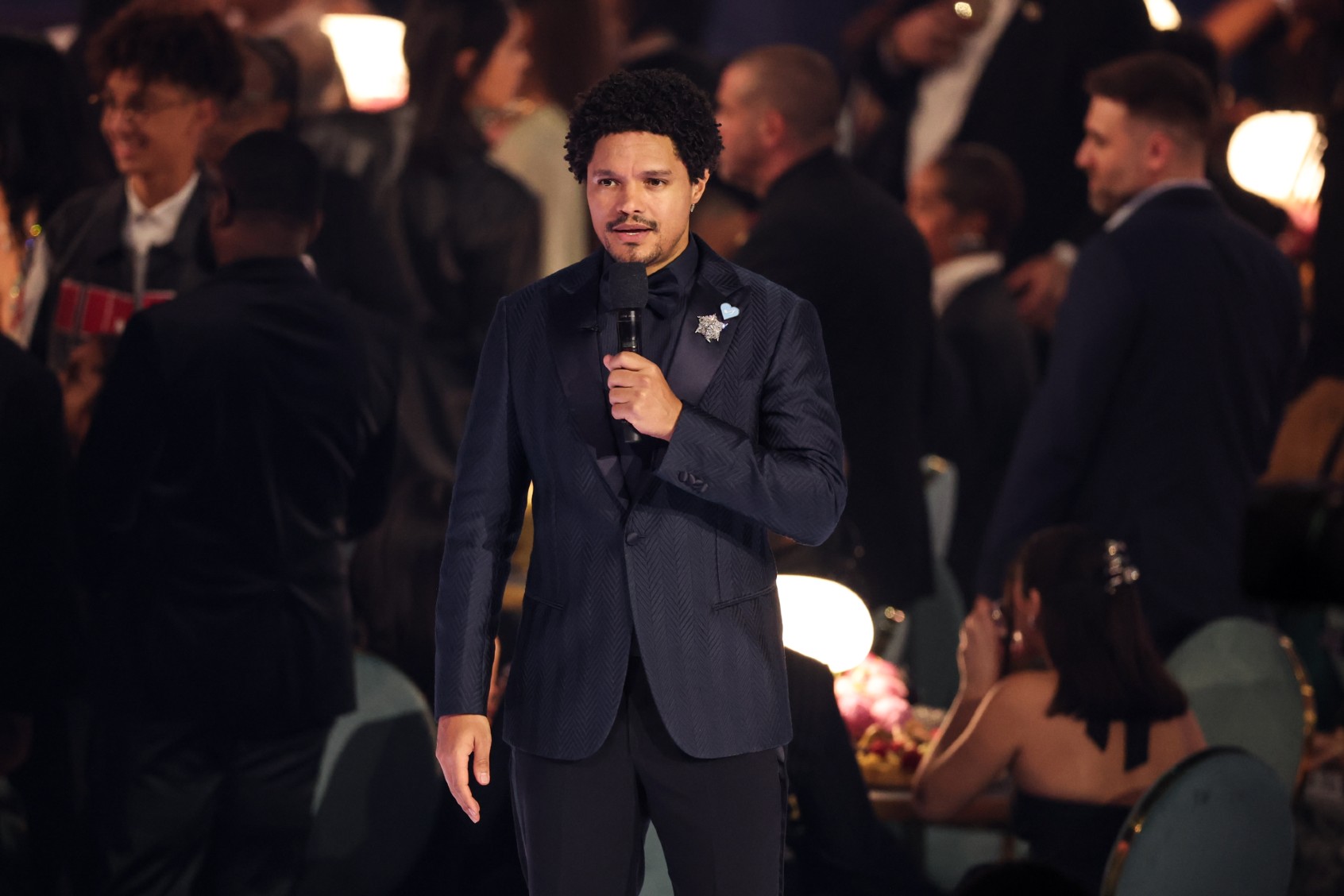
(Christopher Polk/Billboard via Getty Images) Trevor Noah at the 67th GRAMMY Awards held at the Crypto.com Arena on February 2, 2025 in Los Angeles, California.
Trevor Noah scorches South Africa’s fictional “White Genocide”
The fiction of a “white genocide” waged by Black South Africans against white ones is a talking point extremists have been flogging since the first Trump administration; but early in his second, the president actually offered amnesty to South African citizens who believe that being the minority in the country (South Africa is between 7 and 8% white) also makes them victims. In an episode of his podcast “What Now with Trevor Noah” titled “The totally very real white genocide,” the former “Daily Show” host and South African guests Dan Corder (a journalist) and Eugene Khoza (an actor-comedian) probed the forces that allow the myth to continue flourishing.
More than 30 years after the official end of apartheid, roughly three-quarters of South Africa’s land is white-owned; according to the World Bank, the average wage of the country’s white working population is up to three times higher than that of its Black working population. The crux of the white-genocide panic is a conflation of pervasive farm robberies in the country and a land-reform measure giving the government power to repurpose Afrikaner-owned private land for public use, similar to the U.S. power of eminent domain. But despite repeated debunkings of the myth — most recently, a February 2025 court ruling that deemed white genocide “clearly imagined” and “not real” — Trump pushed ahead with an executive order whose summary reads “As long as South Africa . . . allows violent attacks on innocent disfavored minority farmers, the United States will stop aid and assistance to the country.”
The state of race relations in South Africa, Khoza says, “is what happens when forgiveness is given without restitution” in a country whose media continues to see white rule as normative and white suffering as the only newsworthy kind. As Corder puts it, “something extremely horrific has to happen to a Black person before it’s news” — for Black lives to, you know, matter. It’s a dead-serious discussion that will sound familiar to Americans but also reveals some disturbing truths about the post-apartheid truth and reconciliation measures: for instance, that thousands of Black South Africans still have not received the compensation they are due.
As Noah points out, victims of farm robberies are Black as often as they are white. Beyond the virulent racism, he laments, the white-genocide myth does nothing to stop the crime itself: “They used the most heinous word they could think of,” he says — and it’s not surprising that another country in denial about its own history grabbed hold of it.
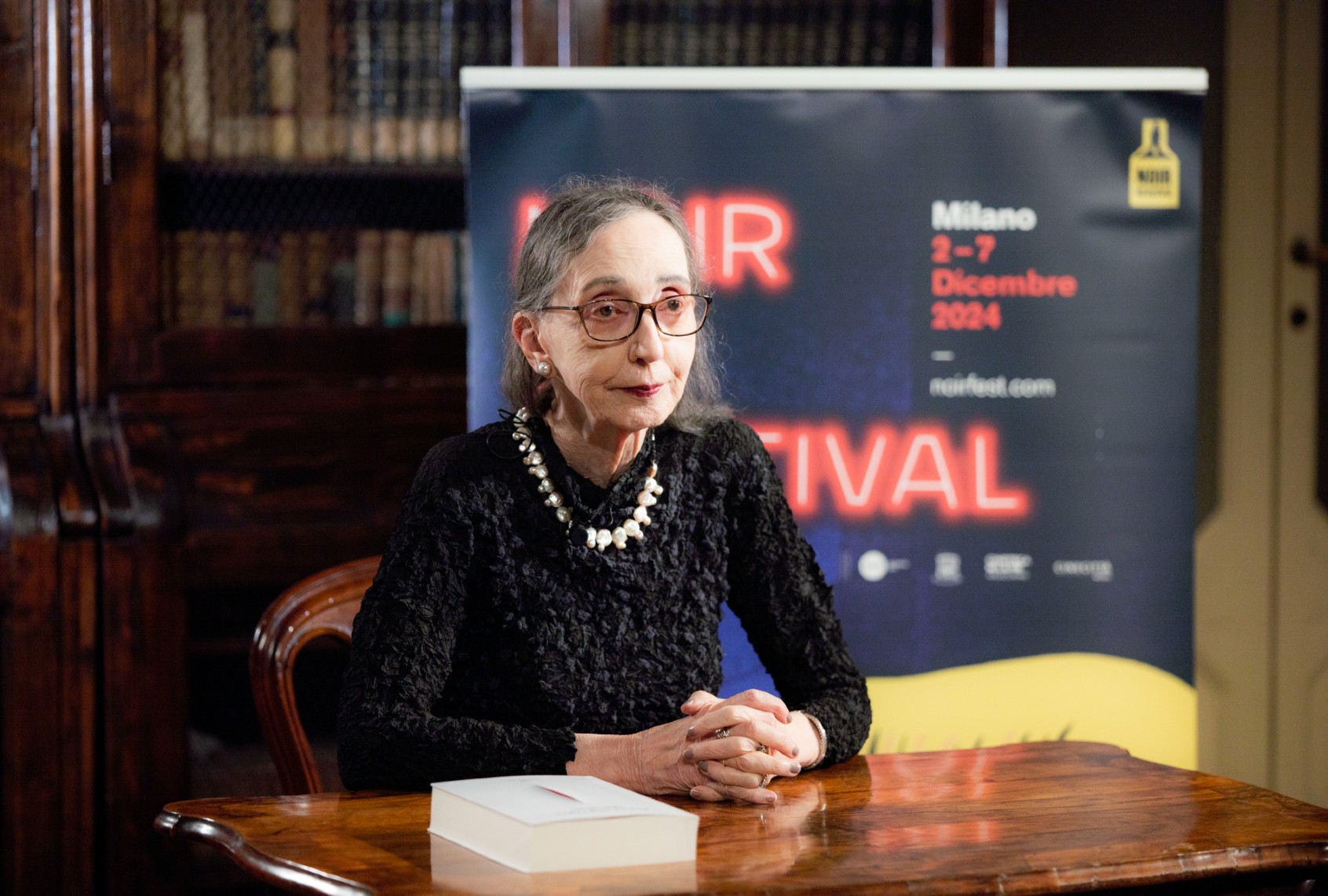
(Leonardo Cendamo/Getty Images) Joyce Carol Oates
Joyce Carol Oates discombobulates Elon Musk
Along with her decade-spanning, National Book Award–winning career as a novelist, Joyce Carol Oates has gained secondary notoriety for being incredibly online, and the octogenarian’s Twitter/X posts — for better and often for worse — are often indeible. Among JCO’s hits: posting a photo of her luridly blistered feet, wondering why we never hear about the “joyous and celebratory” features of ISIS, and accusing people who decorate with skeletons for Halloween of disrespecting the dead. But a recent post underscores why The Guardian has called the 5-time Pulitzer nominee “the poet laureate of Twitter.”
Without once naming him, Oates had Musk crashing out on his own platform.
“So curious that such a wealthy man never posts anything that indicates that he enjoys or is even aware of what virtually everyone appreciates,” she wrote on November 13. “[S]cenes from nature, pet dog or cat, praise for a movie, music, a book (but doubt that he reads); pride in a friend’s or relative’s accomplishment; condolences for someone who has died; pleasure in sports, acclaim for a favorite team; references to history. In fact, he seems totally uneducated, uncultured. The poorest persons on Twitter may have access to more beauty & meaning in life than the ‘most wealthy person in the world.’”
Without once naming him, Oates had Musk crashing out on his own platform: For almost a full day, he endeavored to prove her wrong by commenting on posts about movies and recommending that his followers listen to “The Iliad” at 1.25 speed. (He linked to “The Odyssey” before deleting the post.) Oates fielded kudos with Canadian graciousness, saying the post had come only “out of curiosity: why a person with unlimited resources exhibits so little appreciation or even awareness of the things that most people value as giving meaning to life.”
Want more from culture than just the latest trend? The Swell highlights art made to last.Sign up here
The Financial Times carves up Sam Altman
OpenAI founder Sam Altman spent most of 2025 doing tech-boss spin control, but a cooking video offered some unexpectedly trenchant insight about the company. Bryce Elder’s May 11 Financial Times column, “Three things we learned about Sam Altman from scoping his kitchen,” reviewed footage of Altman’s recent appearance in the weekly Q&A feature “Lunch With FT” and penned a meal-prep critique that cut deep.
The piece started by noting that Altman’s olive oil of choice is the Instagram-famous Graza, packaged in friendly squeeze bottles designated by use: “Sizzle” (for cooking), “Drizzle” (for dipping/finishing) and “Frizzle” (for high-heat cooking). The venture-backed brand built word of mouth by courting influencers; it gained notoriety when its 31-year-old founder threw a tantrum on LinkedIn about another brand’s use of squeeze bottles, seemingly unaware that they have been a staple of restaurant kitchens for decades.
Elder promptly clocks that Altman is using finishing oil for cooking — “inherently wasteful” because any heat applied to oil burns off the flavor nuances — and extrapolates from the showy display that, as far as cooking goes, “[Altman’s] input costs are around six times the going rate, for no discernible benefit.” He goes on to note the presence of a particular Breville espresso machine (expensive, statusy, and, according to many users, unreliable for the price) topped by what appears to be a vacuum-powered knock box known as a “puck sucker” (expensive, excess utility for a kitchen without a continuous flow of espresso drinks). Last is the observation that Altman appeared to be using a very serious Japanese chef’s knife (“either very expensive or very cheap”) for the wrong purpose.
Maybe it’s a stretch, but a tech founder showing off a kitchen whose most prominent features are “a catalogue of inefficiency, incomprehension and waste” says a little something about what that founder prioritizes. And Altman’s style-over-substance cooking echoes his showman’s habit of doing little more than selling the sizzle.
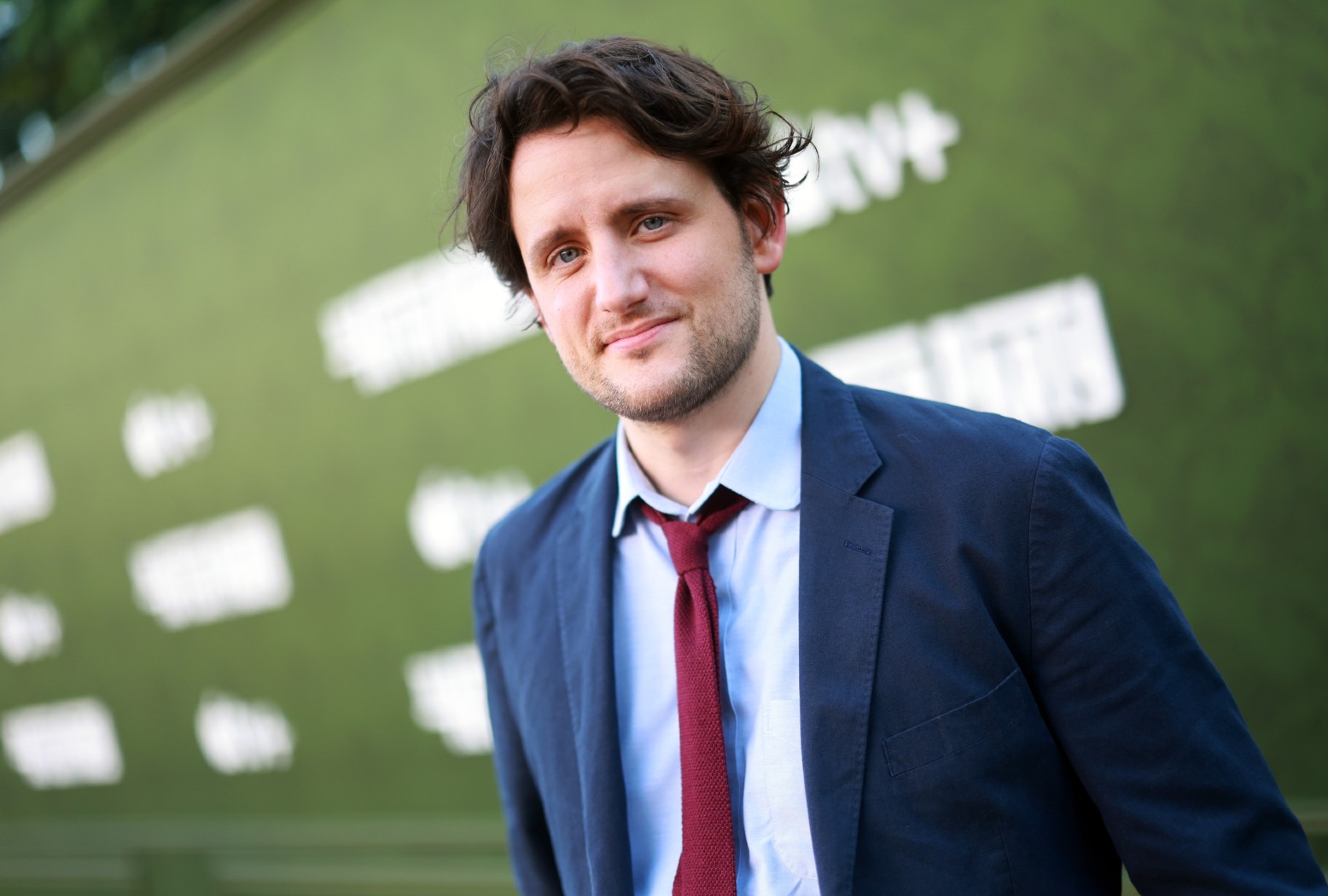
(Matt Winkelmeyer/GA/The Hollywood Reporter via Getty Images) Zach Woods
Zach Woods annihilates Quentin Tarantino
It’s hardly news when Quentin Tarantino lets fly with unnecessary dialogue, but articulating why “There Will Be Blood” didn’t rank higher on his recent list of the Top 20 movies of the 21st Century by repeatedly insulting Paul Dano was definitely a choice. What prompted his declaration that Dano is “the weakest f**king actor in SAG” is a matter of online debate: a few people have theorized that Dano’s acting career is what QT likely envisioned for himself once upon a time, while others said he probably just refused to send foot pics.
“Shut up, Quentin Tarantino, you suck.”
The strangely personal rant brought out public support from Dano’s colleagues, including Ben Stiller and “The Batman” director Matt Reeves. But actor-comedian Zach Woods offered up the most viral clapback in a December 4 TikTok. “Us very weird-looking white boys have to stand up for each other,” Woods said before ripping into Tarantino’s latter-day work with succinct criticism that, while not necessarily new, was delivered with panache:
“Shut up, Quentin Tarantino, you suck. Your recent movies are just taking a historical villain — slave owners, Nazis, the Manson Family — and then using them as a thin pretext to enact your same old tired pornographic violence . . . and then some shot of feet and then the N-word. Your next movie’s gonna . . . probably be like the Boston pedophile priests and then someone ends up putting a Tommy gun in their penis and blowing their brains out through their perineum . . . And then their dying words will be the N-word, for some reason.”
Entertainment Weekly, meanwhile, quoted “There Will Be Blood” costar Colleen Foy, who distinctly recalls Tarantino’s body language when he attended a screening of the film: “He was legit vibing with [Dano’s] performance.”
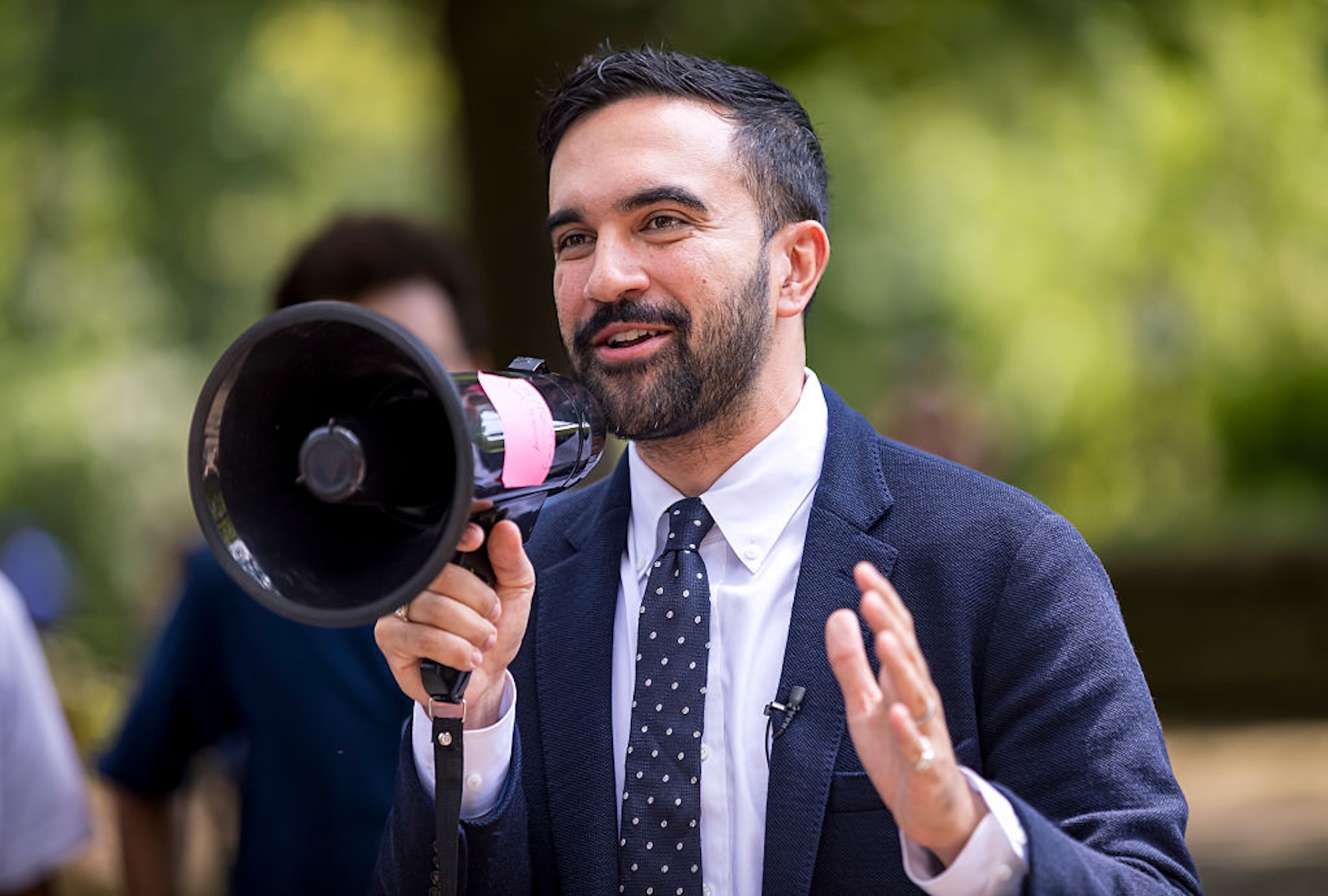
(Michael Nigro/Pacific Press/LightRocket via Getty Images) Zohran Mamdani campaigns for mayor of New York City on an affordability platform
Zohran Mamdani kicks media bloodlust to the curb
It was always clear that two of the three candidates vying to be the next mayor of New York City were going to use the official debates in October to indulge their ill-concealed terror about Zohran Mamdani’s lead with wild accusations and claims. New York governor/sex pest Andrew Cuomo and Guardian Angels founder/reliable weirdo Curtis Sliwa wasted no time doing so: Cuomo claimed that Mamdani “stoke(s) the flames of hatred against Jewish people,” and Sliwa, just for starters, called Mamdani an “arsonist” and repeated the false claim that Mamdani had called for “global jihad.”
But even for a pair of debates destined to become fodder for a “Saturday Night Live” cold open, a bizarre line of questioning about parades gave the 34-year-old Mamdani a chance to distinguish himself from two old men yelling at clouds. “Will you march in all the parades that mayors have traditionally marched in, or are there any you would boycott?” asked moderator Melissa Russo of NBC4, and after Sliwa and Cuomo gave their answers, Mamdani smiled and said, “There are many parades I would not be attending because I’d be focusing on the work of leading the city.” Russo then changed tacks, asking, “Are there any parades that don’t exist that you think should, Mr. Mamdani?” and seeming determined to make the candidate confess to plans for monthly Communist Socialist Jihadist festivities throughout the city.
Mamdani answered with exactly the level of gravitas suited to a question about nonexistent events: “I haven’t thought much about parades, to be honest with you.” His refusal to engage highlighted the most inadvertently funny line of the night (Sliwa: “Every parade has a right to exist in New York City”); more importantly, it reassured voters — just as his post-election visit to the White House would — that he wasn’t there to participate in anyone’s ginned-up media battles.
Tatiana Schlossberg dismantles RFK, Jr.
Since Donald Trump announced that he would be appointing Robert F. Kennedy Jr. to “go wild on health,” some of the sharpest counterpunches have come from within the Kennedy fold. Mockingly profane takes from cousin Jack Schlossberg have gotten most of the headlines, but the most resonant came from Schlossberg’s 35-year-old sister, Tatiana, who, in a devastating New Yorker essay, revealed that she had terminal leukemia.
Forget the raw milk and beef tallow: Schlossberg’s takedown of the Secretary of Health and Human Services is about the current and future impact of watching as her cousin’s reckless, anti-science claptrap was elevated to a national stage and his slash-and-burn campaign cut “nearly a half billion dollars for research into mRNA vaccines, technology that could be used against certain cancers; slashed billions in funding from the National Institutes of Health, the world’s largest sponsor of medical research; and threatened to oust the panel of medical experts charged with recommending preventive cancer screenings.” (The latter, at least, remains undecided.)
The 1963 death of then-President and First Lady Kennedy’s prematurely newborn son, Patrick Bouvier Kennedy, spurred JFK to earmark $265 million for research that led to the development of neonatal medicine, which in subsequent years saw a significant drop in infant mortality. Schlossberg’s prognosis has inspired nothing in her cousin, and his silence underscores how many people will — already have — died as a result of his unearned arrogance.
Read more
about political putdowns


