

You hear it all the time. Hell, you might have even said it yourself (I know I have): “Hollywood’s out of ideas!” That sentiment can often seem true in a market where studio executives favor sequels and drab intellectual property over originality and fresh takes. But so far in 2026, curious viewers have had no shortage of interesting, innovative films to run to the theater for. With movies like “Obsession” and “Backrooms” already dominating the early-summer box office, the industry is rethinking its iron-grip commitment to regurgitating the same films audiences have seen 100 times before, in slightly different ways.
But before those modest movies became big hits, the first six months of the year boasted plenty of outstanding films to offer viewers fatigued by more of the same. With their bold scripts, memorable atmospheres and breathtaking visual landscapes, these films were enough to reinstate some faith in the Hollywood machine. These movies swung for the fences to prove that all is not yet lost — an idea that, in itself, can feel subversive.
But at the movie theater, it’s the truth: Hollywood still has an interest in funding visionary stories. And even if the resulting films weren’t total five-star knockouts, their big swings helped them stand out from the crowd. By virtue of their creativity alone, these 11 movies have the power to restore your faith in film. Just . . . keep an open mind!
Films are arranged alphabetically by title.
(George Lechaptois) Jodie Foster as Lilian Steiner in “A Private Life”
“A Private Life”
At first glance, one might think the boldness brimming from Rebecca Zlotowski’s “A Private Life” has something to do with the film being Jodie Foster’s first entirely French-speaking role. And though that aspect is certainly mesmerizing, it’s more of a selling point, something to pique the viewer’s curiosity while silently encouraging them to peer deeper to understand exactly why the film is so beguiling — a nosiness that “A Private Life” encourages and rewards at every turn. On the surface, Zlotowski’s film is a stylish murder mystery about renowned psychotherapist Lillian Steiner (Foster), who can’t let go of a nagging suspicion when one of her longtime patients dies unexpectedly.
But as Zlotowski peels away the layers of Lillian’s own psyche, she uncovers the truths that bind us all together, working through neuroses and regrets to establish a universal language by which we can all communicate, even when it seems impossible. If you’re a fan of Brian De Palma or Alfred Hitchcock’s sophisticated suspense, you’ll find few scenes from this year more compelling than Lillian’s trips to the hypnotist, which are keys to solving the mysteries of this film, as well as some of our life’s most difficult puzzles.
“Blue Film”
Often, the biggest cinematic swings can be found in the smallest, most economical films. Such is the case with Elliot Tuttle’s “Blue Film,” a two-hander about a cam boy and escort named Aaron (Kieron Moore) who arrives at a client’s (Reed Birney) house and stumbles into something far deeper and darker than he ever could’ve expected. What sounds like something close to your average gay indie is much more incisive and relentless than one could ever imagine, a film so confident in itself without being cocky that it inversely mirrors its main character’s energy, disarming both Aaron and the viewer. Once those walls are down, “Blue Film” gets to work mining the ego’s fragility and tearing stereotypes limb from limb to peer at the root of their existence. The year may only be half-over, but you won’t see another movie like “Blue Film” anytime soon.
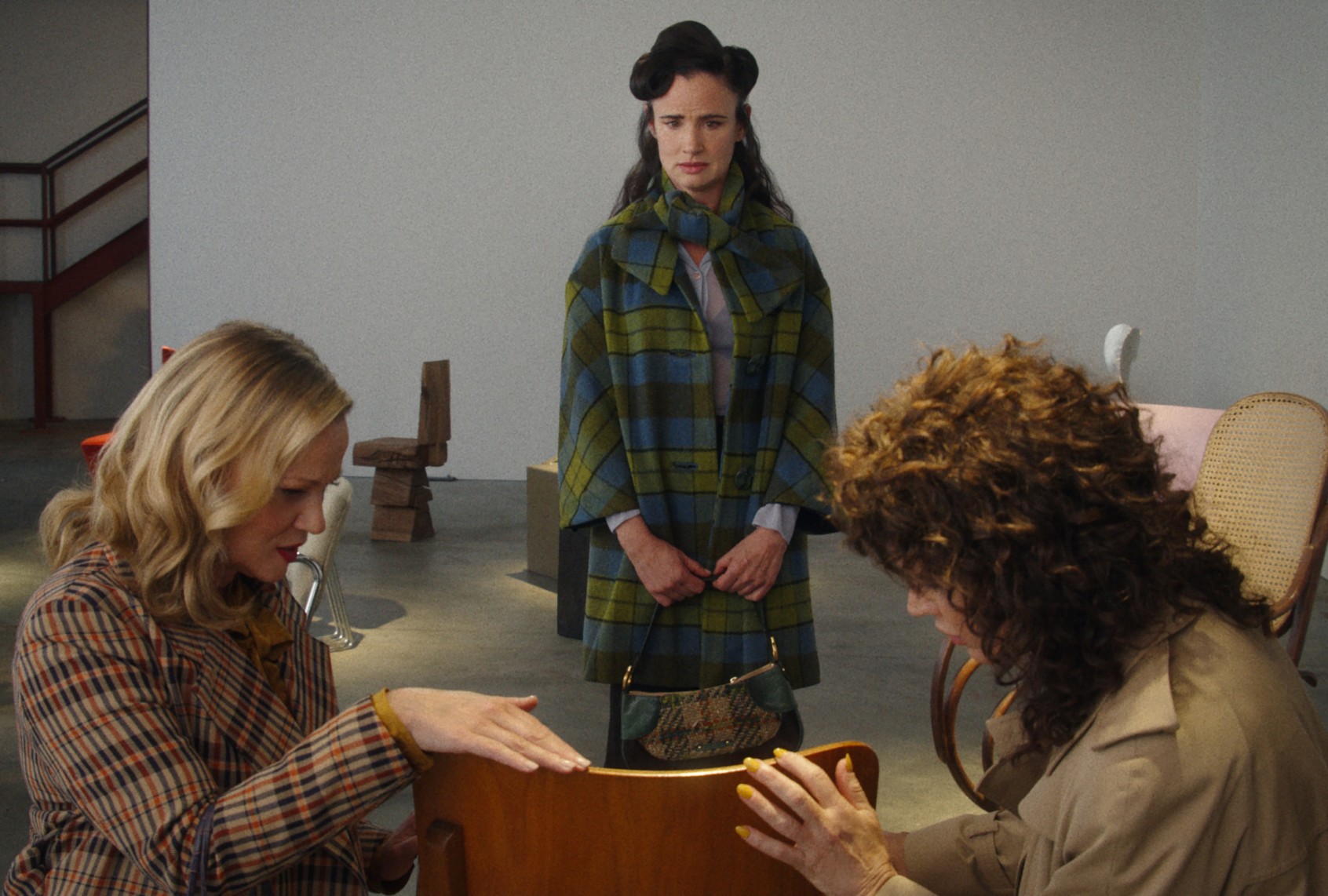
(Music Box Films) Samantha Mathis, Juliette Lewis and Robin Tunney in “By Design”
“By Design”
It’s impossible — at least for me — to talk about “By Design” without acknowledging that it has one of my favorite loglines of any film ever: “A woman swaps bodies with a chair, and everyone likes her better as the chair.” Not only does this single sentence tell you everything you need to know about the film while nodding at its less overtly amusing intricacies, but it also allows the viewer to understand exactly what they’re getting into by pressing play. Juliette Lewis will spend the majority of the film’s runtime inanimate; a chic vegetable that her friends draw lipstick on and talk to, as if she were as normal and responsive as any other day. Fashioning your lead actor as a totem to project your thoughts about apathy and loneliness would be a risky move for anyone other than writer-director Amanda Kramer, who’s made a career out of brazen chicness. But “By Design” isn’t mere style over substance. The film is a distinctly modern rumination on the desire to shut off and watch the world go by, without forming an opinion on the horrors. If only Ashley Furniture offered free lobotomies with every purchase.
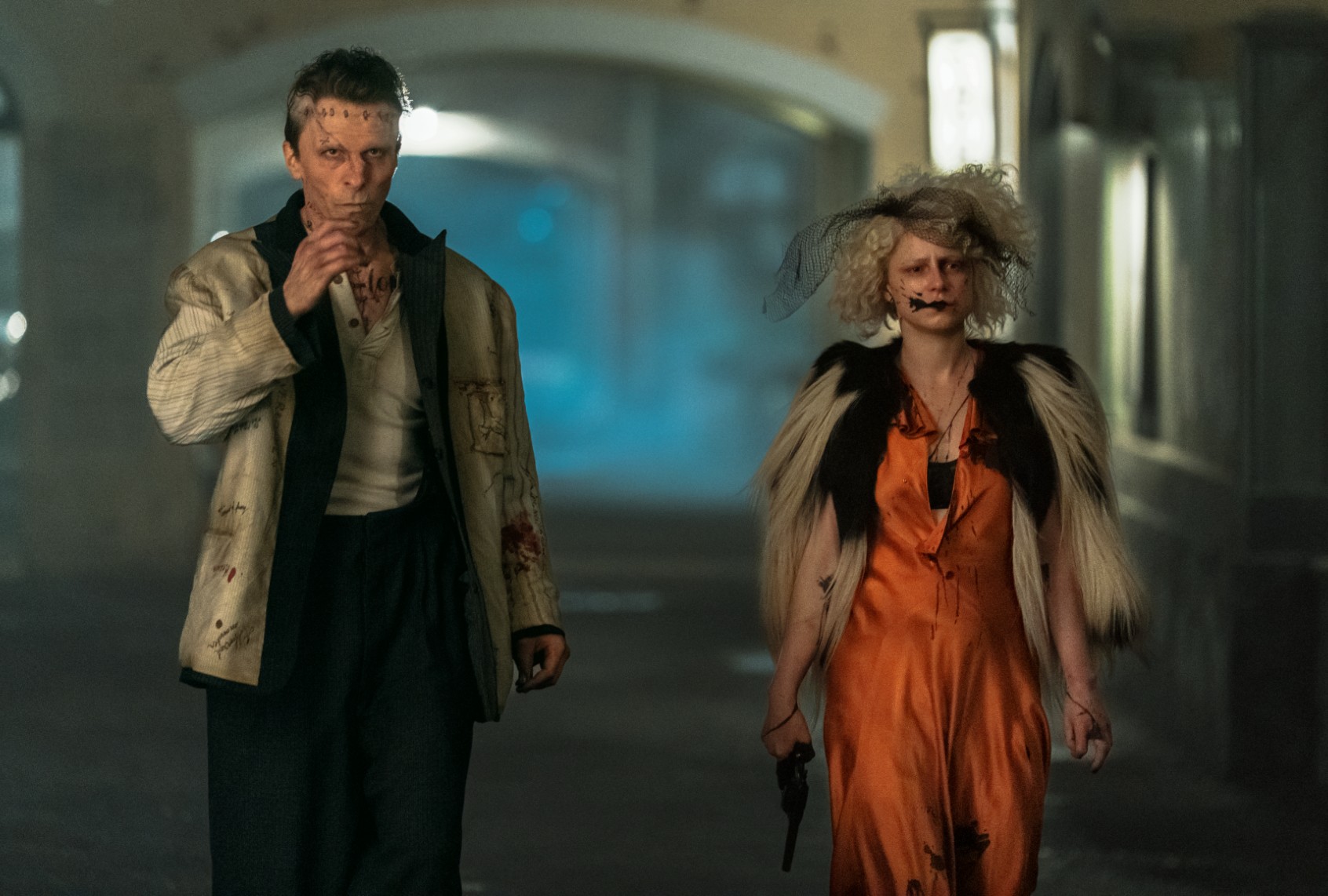
(Niko Tavernise/Warner Bros. Pictures) Christian Bale as Frank and Jessie Buckley as The Bride in “The Bride”
“The Bride!”
It may sound strange to say it, but a woman helming a “Frankenstein” riff is bold by its very nature. Only a handful of the adaptations of Mary Shelley’s beloved classic have been directed by women. That’s strange, considering the novel has a distinctly feminine gaze, discussing othering and marginalization with a familiarity no man (at least not a straight, white one, as is the case with most “Frankenstein” films) could accurately convey. But Maggie Gyllenhaal’s “The Bride!” revels in surprise.
Want more from culture than just the latest trend? The Swell highlights art made to last.Sign up here
The film — where Jessie Buckley plays three characters, each with their own frenzied personality — may be tonally imbalanced and, at times, utterly befuddling. But that’s also what gives the movie its charm, especially considering it’s a big-budget studio production that never had a shot at recouping the studio’s investment, even if it were successful. In our dire age, a little bit of levity can often feel like a wager, staking your bets on an audience’s bandwidth for fun. But if you can put aside its context and view “The Bride!” as a kitschy Halloween affair, a “Scooby-Doo Meets Frankenstein’s Bride” animated special come to life, it’s almost impossible not to crack a smile.
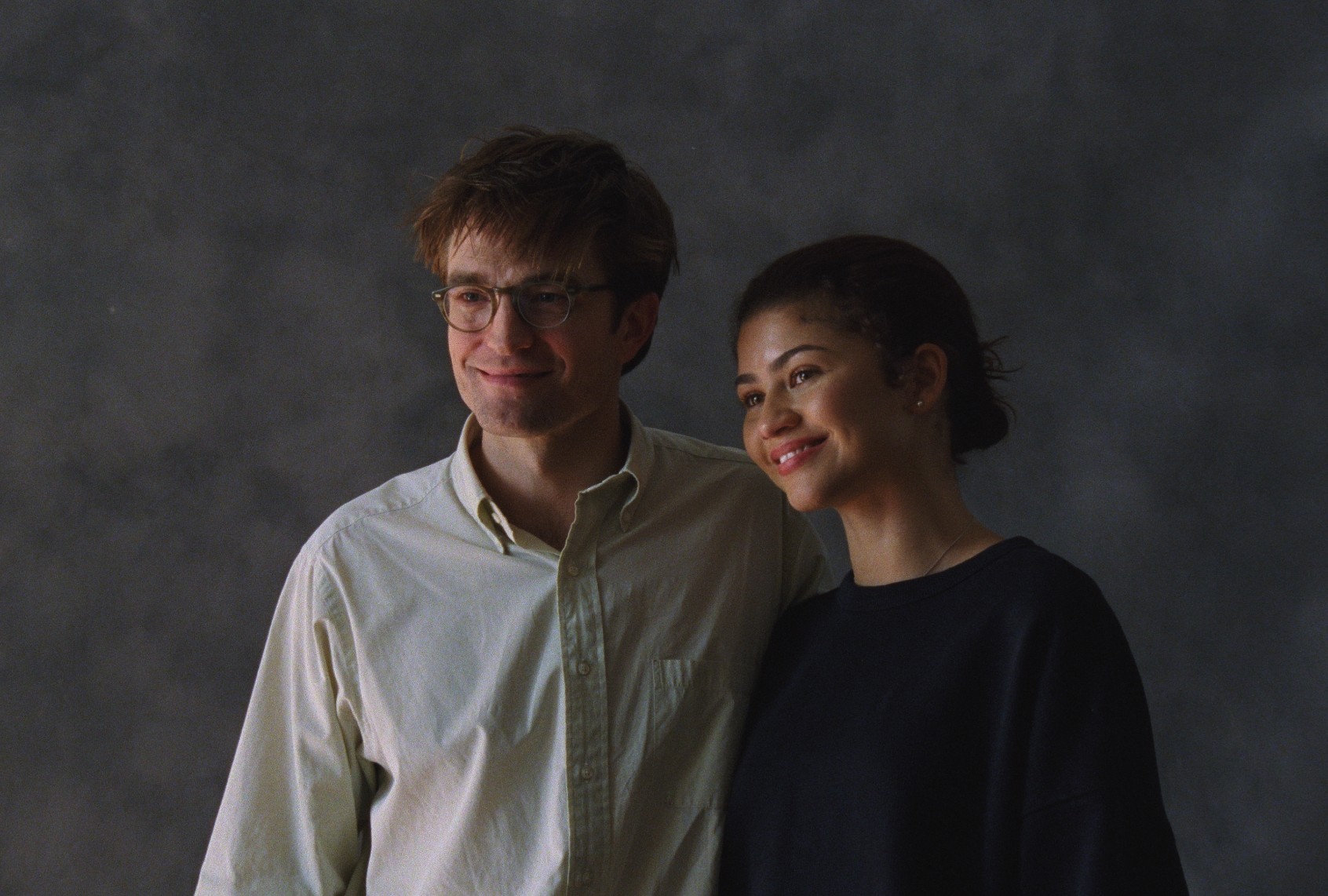
(A24) Robert Pattinson and Zendaya in “The Drama”
“The Drama”
Hinging a film on one big narrative element is already a hazardous decision. A third-act twist or sudden death can change a viewer’s overall perception of a movie in an instant. But alluding to that surprise in the film’s marketing, like “The Drama” did, implies a greater trust in the audience. For his latest film, Norwegian writer-director Kristoffer Borgli was confident that people would rock with his shock — they could handle a controversial, complex plot point being dumped in their lap, not as provocation, but as conversation. It helps, too, that this jolt is delivered by two of the most talented young actors working today, with Zendaya and Robert Pattinson playing a soon-to-be-married couple grappling with a stunning revelation days before their nuptials. Borgli’s deft mixture of punchy dark humor and thorny subjects makes for a distinctly American movie that only a Norwegian could think up. That outsider’s perspective translates to one of the year’s finest films.
“Dreams”
In her second collaboration with Mexican writer-director Michel Franco, Jessica Chastain once again proves herself as one of the most daring yet underrated actors of her generation, leaping into this quietly violent romance about class and power headfirst. As Jennifer, a willful and wealthy socialite who arranges for her paramour, a Mexican ballet dancer named Fernando (Isaac Hernández), to risk crossing the border so they can be together, Chastain exudes the unruliness of all of her best characters. But when their relationship takes a turn in the film’s latter half, Franco and Chastain place supreme confidence in one another, trusting each other to grapple with the prickly political implications of the film’s narrative with sober earnestness. As “Dreams” veers on exploiting prejudice, Franco pans out for a broader view of the carnage our desperation to survive can invoke. “Dreams” may be formally modest, but its ideology is anything but.
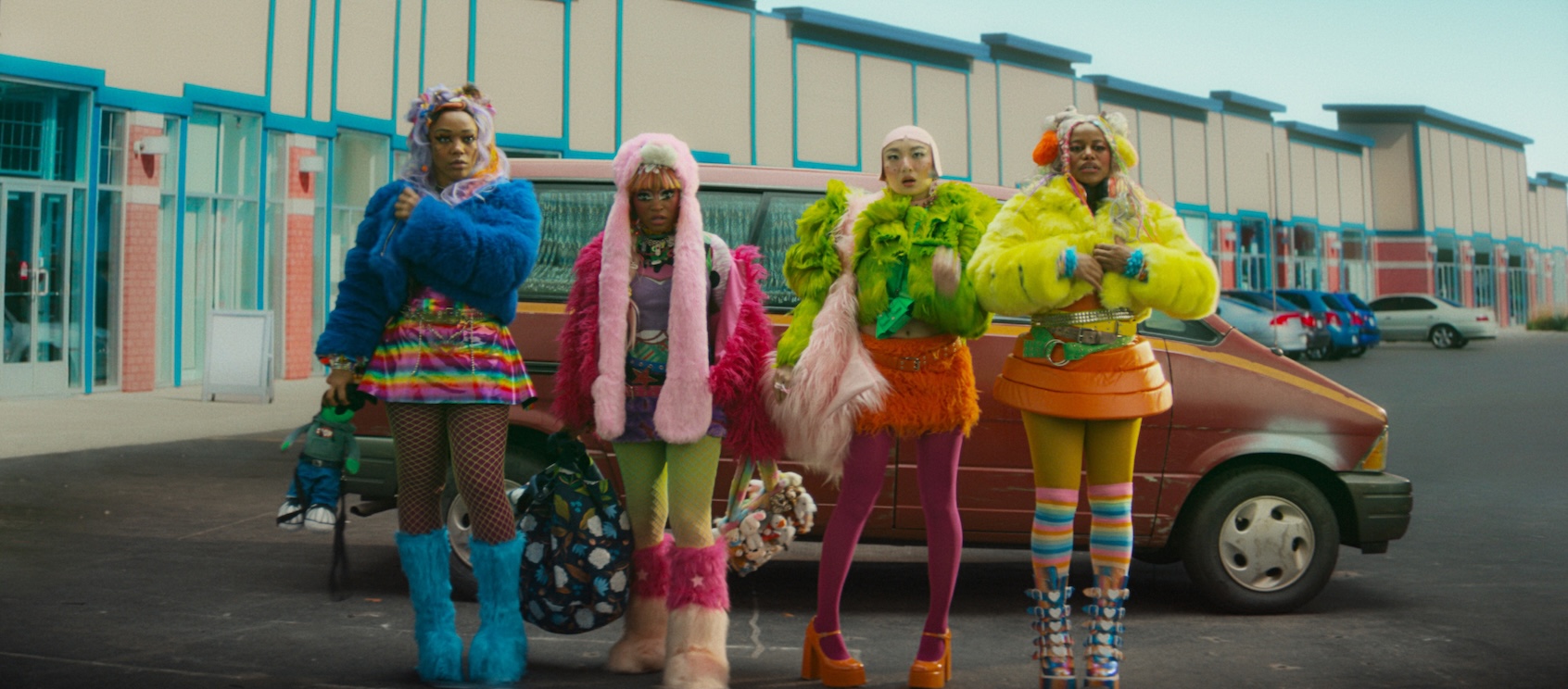
(Courtesy of NEON) “I Love Boosters”
“I Love Boosters”
As if releasing a pro-stealing film in a very anti-theft corporate culture weren’t ballsy enough, radical filmmaker Boots Riley grabs everything from the kitchen sink and tosses it into the blender for “I Love Boosters.” There are explosions of vibrant color, a cacophonous main theme, social commentary aplenty, and practical effects so awe-inspiring — miniatures, stop-motion, a wheel of spinning mannequin legs! — that they alone can restore your faith in film. Riley crafting a cogent message about workers’ rights and the price of labor would be a feat in and of itself, especially in a film this fun. But that he’s done it with such singular style and childlike glee is enough to make the audience remember that a movie theater is a hallowed space. On the silver screen, the zaniest ideas can also carry the weight of the world, and it’s hard to understate just how nice it is to free our shoulders of that burden, even for 90 minutes.
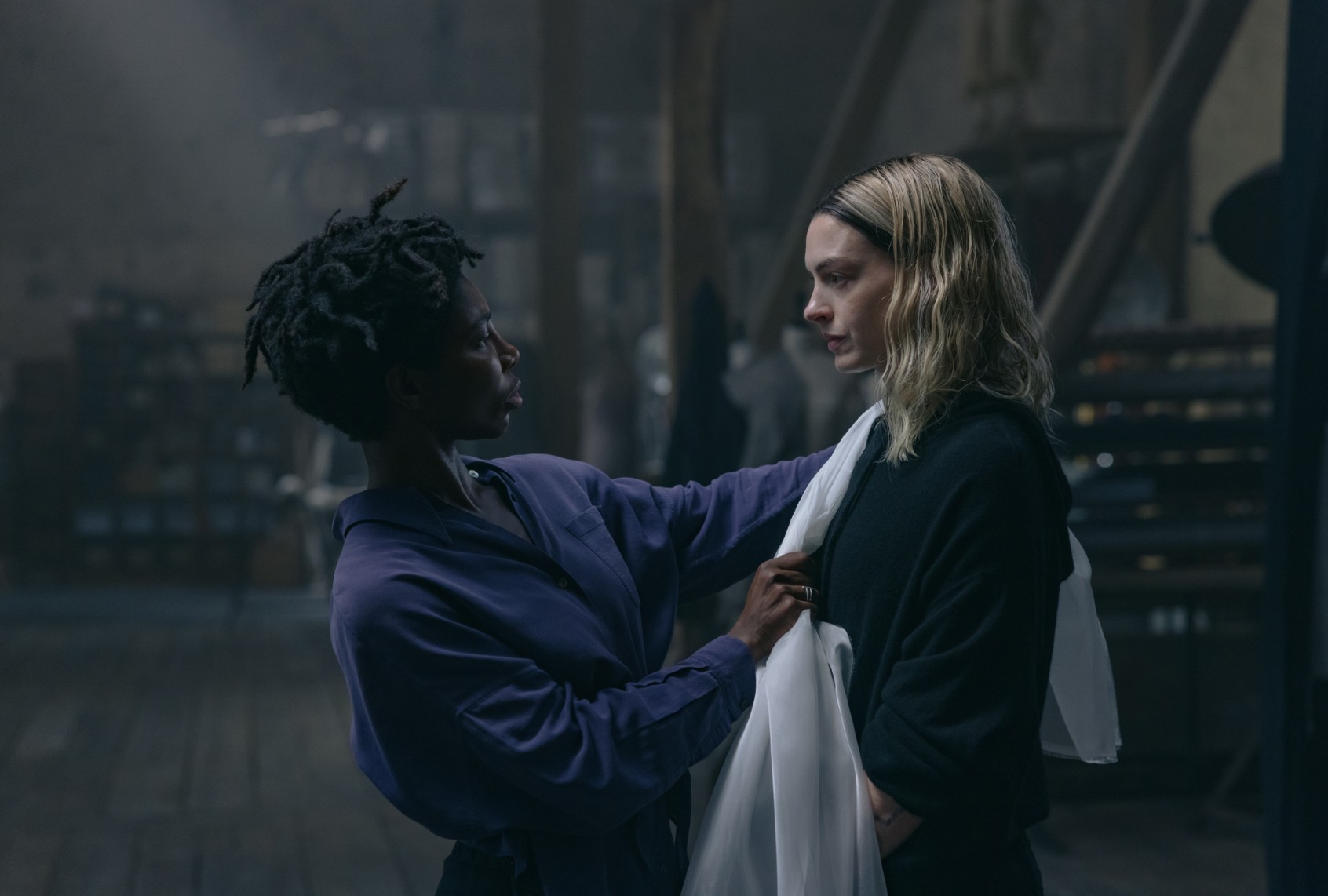
(Eric Zachanowich/A24) Anne Hathaway and Michaela Coel in “Mother Mary”
“Mother Mary”
Confining a world-famous pop star to a blustery old house in the English countryside for the entirety of a film seems inharmonious. Shouldn’t Anne Hathaway’s titular Mother Mary be jet-setting on a world tour, or contending with her problems somewhere that feels a bit more apt for someone who’s supposed to be one of music’s biggest stars? Maybe, but fortunately for us, the Chateau Marmont no longer allows guests to perform seances. Instead, filmmaker David Lowery threads Hathaway’s high-caliber performances into his modern ghost story with all the fluid expertise of Mother Mary’s estranged best friend, fashion designer Sam (Michaela Coel). When Mary shows up unexpectedly, asking Sam for the two things she won’t provide — forgiveness and a dress — the pair slowly find their bond regenerating, pulled back together by forces outside their control. Mixing languid conversations with pop spectacle, Lowery finds a middle ground that looks altogether human, with every impulse, bad and good, opening another door to the truth.
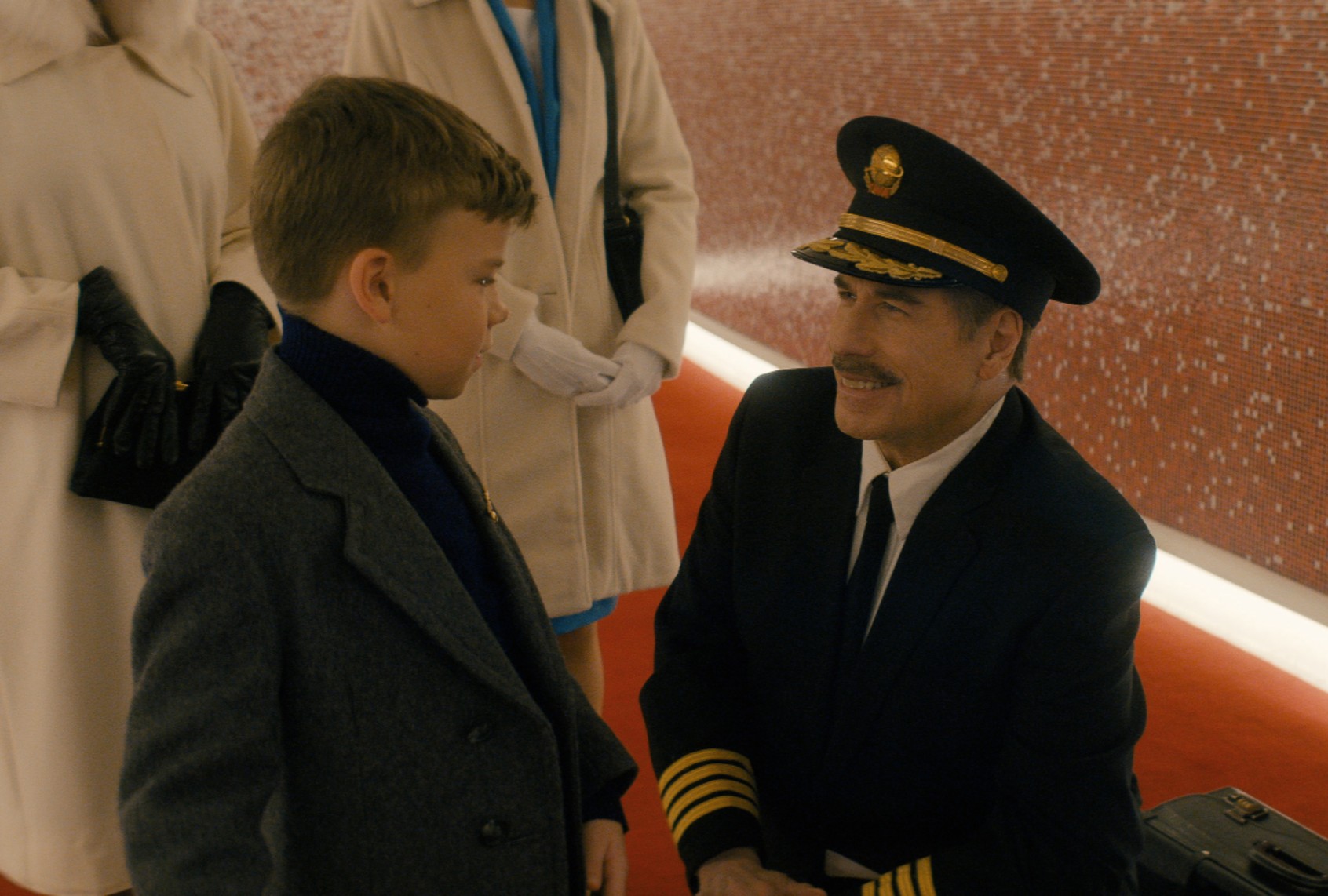
(Apple TV) Clark Shotwell and John Travolta in “Propeller One-Way Night Coach”
“Propeller One-Way Night Coach”
In his directorial debut, John Travolta takes a swing so big that it knocks him off his feet and jettisons him into the air — 30,000 feet in the air, to be exact. Travolta’s never been cavalier about his passion for flying and aeronautics, but rarely has he spoken as candidly about the source of that love as he does in “Propeller One-Way Night Coach.” But instead of taking the seasoned actor’s approach to directing, which often translates to schmaltzy, overly macho films that couldn’t bear their heart to save their lives, Travolta opts for total sincerity.
His movie is a remarkable piece of autofiction, retelling his first experience with air travel as if it were a love story. In some ways, it is: In “Propeller One-Way Night Coach,” Travolta works from the point that his affection for flying and his adoration for his family converge, creating an experience that is (and I don’t say this lightly) truly magical. The film may be short and sweet, but its effects are everlasting.
“Stop! That! Train!”
RuPaul’s affection for everything inane, disgusting and gloriously stupid lends itself perfectly to a disaster spoof like “Stop! That! Train!.” But that perfect marriage alone doesn’t automatically make dipping back into the Zucker, Abrahams and Zucker style of spoof comedy feel revolutionary. Refreshing this lagging comedic subgenre are several well-loved “RuPaul’s Drag Race” alums, drag queens who have proven their appeal and talent in the Emmy-winning reality show’s demanding chaos, and are ready for their close-ups on screens across the country. While “Drag Race” is no longer a niche program, the art of drag remains contentious, and giving a wide release to a film like this is both confident and dicey. But that’s the kind of firm statement that the world needs more of right now. And even if the jokes in “Stop! That! Train!” don’t always hit, it’s always admirable to punch above your weight.
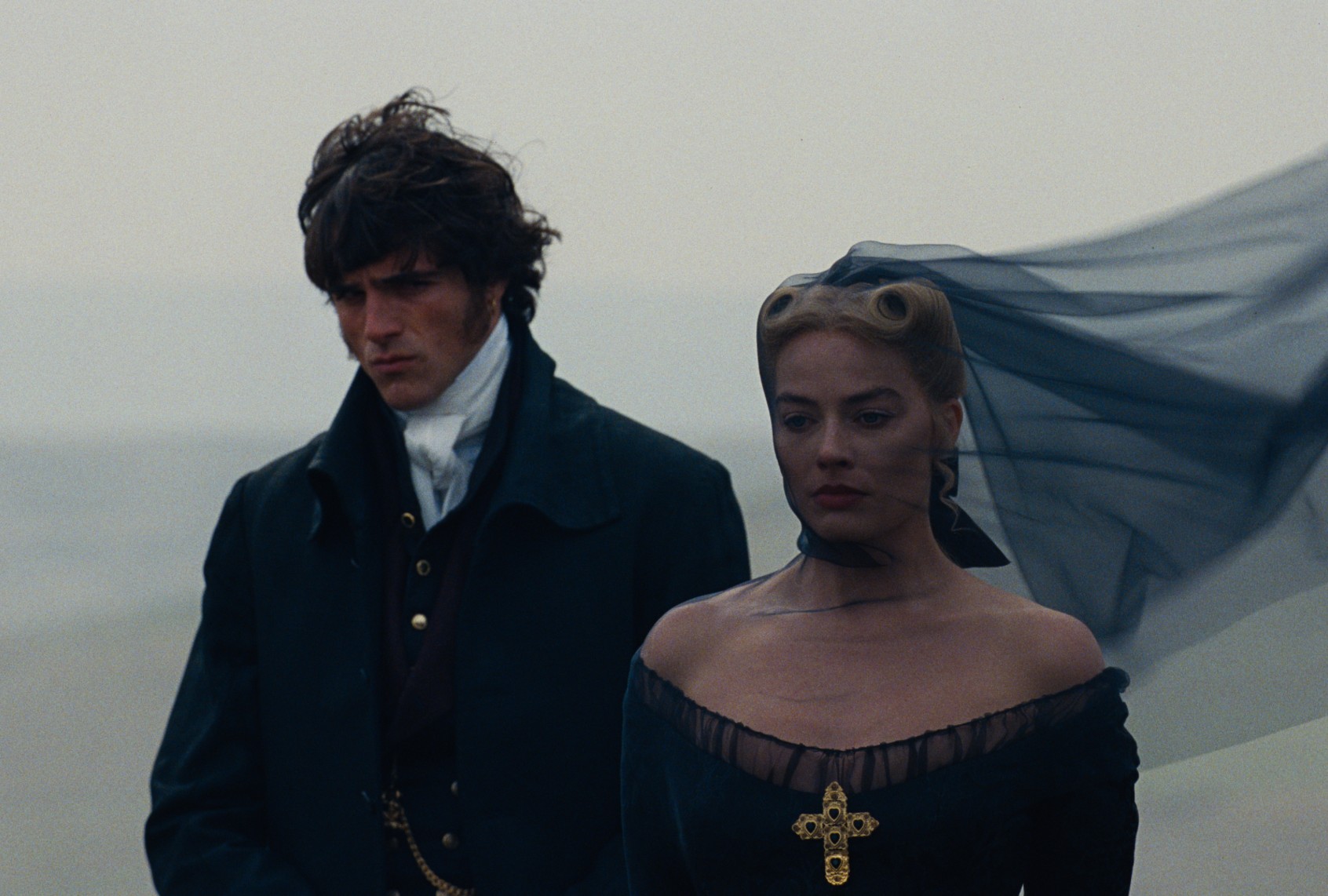
(Warner Bros. Pictures) Jacob Elordi as Heathcliff and Margot Robbie as Catherine Earnshaw in “Wuthering Heights”
“Wuthering Heights”
I admit that Emerald Fennell’s adaptation of Emily Brontë’s classic novel is a radioactive choice for a best-of list. But I defy anyone to name another film this year that balances spectacle and sweeping romance at the blockbuster level as well as Fennell’s film does. Given a blank check, Fennell brings the world of Brontë’s novel to life — not with staggering realism, as so many other adaptations have, but with fervent fantasy. “Wuthering Heights” looks just as the voracious reader imagines it as they tear through the novel: drafty houses, windy moors, color and texture that bound from the screen. This hyperstylishness may put off viewers who demand complete faithfulness to the source material, but that discomfort is Fennell’s point. Unlike her first two films, “Promising Young Woman” and “Saltburn,” Fennell isn’t pushing the envelope here with needless psychosexual provocation (Though there is some of that too, but all earned, I’d argue.) Instead, she hopes that the romance and fantasy will work on their own merit to sweep readers off their feet, conveying just how great it can feel to get lost in a great book.
Read more
about great films that didn’t make this list


