

Over three seasons set in three different decades, “The Comeback” has been guided by the constant, evergreen punchline of Lisa Kudrow’s Valerie Cherish not quite getting what’s happening to her career. The first season, in 2005, follows her return to TV on a bland network sitcom called “Room and Bored.” Season 2 returned nine years later to wrestle with Peak TV’s onslaught.
For its third and final season, “The Comeback” finds Valerie a project in which she’s the star and an executive producer. The catch, and it’s a big one, is that the show is entirely written by artificial intelligence. Valerie and her publicist, Billy (Dan Bucatinsky), are compelled by a non-disclosure agreement to keep that a secret from the rest of the cast, the crew and the rest of Hollywood. Otherwise, the town would revolt and the show’s prospects would be ruined. Probably. Well, possibly.
“The Comeback” is a handy distilling mechanism for an industry that can’t help drowning itself in excess. Valerie’s career is a long curtsy to declining standards and compromises; her 2014 journey thumbed its nose at the town’s prestige-chasing. To Valerie’s credit, she transformed her “Room and Bored” struggles into an Emmy-winning performance on its crueler version, “Seeing Red.” Getting that recognition required her to portray a chauvinist’s version of a sitcom character that was beneath her on a show about another show.
(Erin Simkin/HBO) Lisa Kudrow, Dan Bucatinsky and Andrew Scott in “The Comeback”
But then, what does such recognition mean in an industry where original storytelling and concepts are diminished or obscured by mountains of middling? Peak TV should have been a gold rush for writers and actors. Instead, it led to a world of job insecurity and wages too low to support most people, let alone a family.
In the wake of double haymakers inflicted by the pandemic and the dual writers’ and actors’ strikes in 2023, the ground is fertile for the AI revolution to seed all kinds of second-rate content. In fact, 2023 is where these new chapters of “The Comeback” begin.
Winning her latest role didn’t require Valerie to audition or endure nerve-wracking pitch meetings because the show was built for her. A brief stint on “The Traitors” led to her becoming a meme (“Stressful!”), and she has a long history career in TV comedies, including one hit. In short, the algorithm likes her and predicts the audience will, too. The best reason she can come up with for staying quiet and playing along is that talking about AI simply isn’t sexy.
Technological revolutions have fueled storytelling since the release of “Metropolis” nearly a century ago. Back then, nobody could conceive of humankind being connected by machines that also facilitated our disconnection from each other. The idea of artificial intelligence, let alone a personal computer, was a fantasy at best. What was real was that actors and writers had studio contracts and jobs that supported them.
“The Comeback” has a way of reappearing with Valerie’s perky “hello, hello, hello!” at inflection points like this, making the perpetually out-of-step performer uncannily right on time, always. This time, we’re seeing the actor’s answer to “The Studio,” only instead of satirizing the industry’s artistically cheapening franchise obsession, it warns of the full extinction of originality by way of ChatGPT.
Since “The Comeback” is about a career and industry circling the drain, Kudrow and her co-creator, Michael Patrick King, are natural choices to confront AI’s threat to movies and TV series.
As in past seasons, Valerie continues to have cameras dogging her every step, but the fact that she’s recording anything gives her a reason to resume working with her reality show’s producer, Jane (Laura Silverman). For Jane, it’s either that or bagging groceries at Trader Joe’s.
Since “The Comeback” is about a career and industry circling the drain, Kudrow and her co-creator, Michael Patrick King, are natural choices to confront AI’s threat to movies and TV series. King has created some timeless shows (“Sex and the City”) along with chewable cud for the network machine (“2 Broke Girls”). Through Valerie, Kudrow slyly performs our terminal habit of downgrading devastating developments to champagne problems, merrily chirping her character’s catchphrase, “How’s that?” Since her show’s generative AI is also working for a streaming service that assumes viewers aren’t paying close attention to what’s happening onscreen, the catchphrase is also the show’s title.
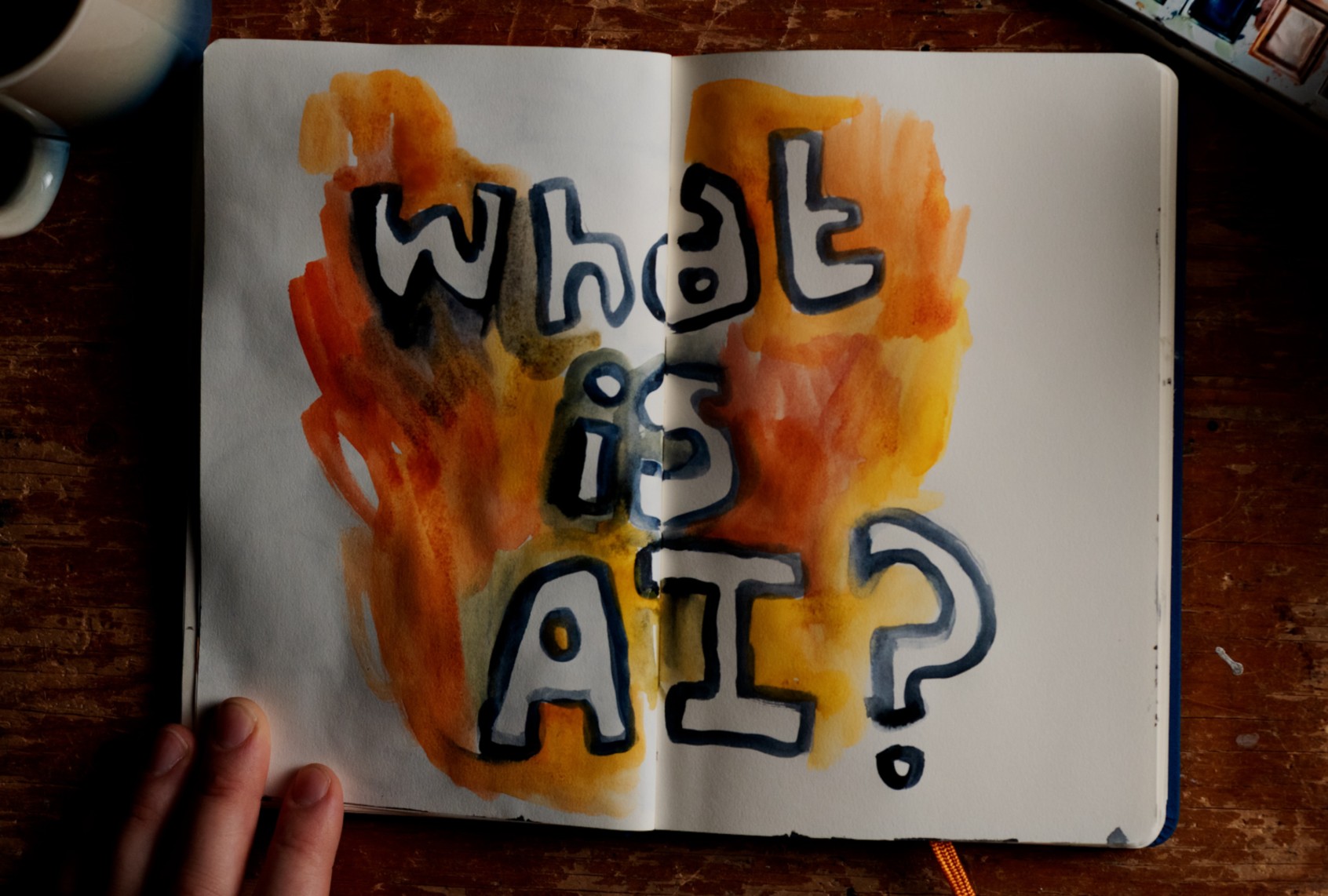
Elsewhere, “Navalny” filmmaker Daniel Roher also tries to look at the bright side in his latest, “The AI Doc: Or How I Became an Apocaloptimist,” but only after gazing into the abyss. Kudrow’s comedy and the film – a real doc, not a mockumentary – take different approaches to grasping the fear and possibility of AI’s impending takeover. But they land in the same place of accepting its inevitability.
Roher and his co-director, Charlie Tyrell, approach AI with much more attention to the worldwide ramifications of its insinuation into our lives than Valerie, as one would expect, although Roher’s motivation is intimately personal: The movie captures him on the verge of first-time fatherhood, and the rise of artificial intelligence has him questioning what kind of world his child will inherit, if any of us have a future at all.
(Focus Features) “The AI Doc: Or How I Became an Apocaloptimist”
Valerie’s quandary seems much plainer in that her show’s success would be a death sentence for entertainment creatives. Meeting Josh (John Early) and Mary (Abbi Jacobson), the husband-wife team only underlines that danger. They agree to attach their names to “How’s That?!” to lend it legitimacy, and are virtually powerless to affect the plots generated by a program their network has deceptively nicknamed Al. It can churn out dozens of jokes in a matter of seconds, and although most of them are hacky, the organic creative process, though ultimately superior in capturing the nuances of human interaction, is much slower.
“I’m just trying to get me and my kids out of this town before it explodes,” growls Mary when Valerie presses her to punch up one of Al’s substandard scripts. In the face of a robot invasion, resistance is futile.
The current “Comeback” storyline is the brighter side of the “AI Doc” coin in that Al’s glitches are surreal and hilarious at worst.
Affirming that is “The AI Doc”’s proposal that the sunny side of artificial intelligence’s sales pitch is probably too seductive. Recently, Disney handed part of its dream factory over to OpenAI and its Sora video app, a deal that sent chills through the industry. Some spun it as a testing ground to figure out how human-made media and generative tech could work together sustainably, but that was always a tough sell in this AI slop era.
Tuesday, OpenAI announced it was abandoning its video-production aspirations, giving Disney a graceful exit until the next model storms the castle.
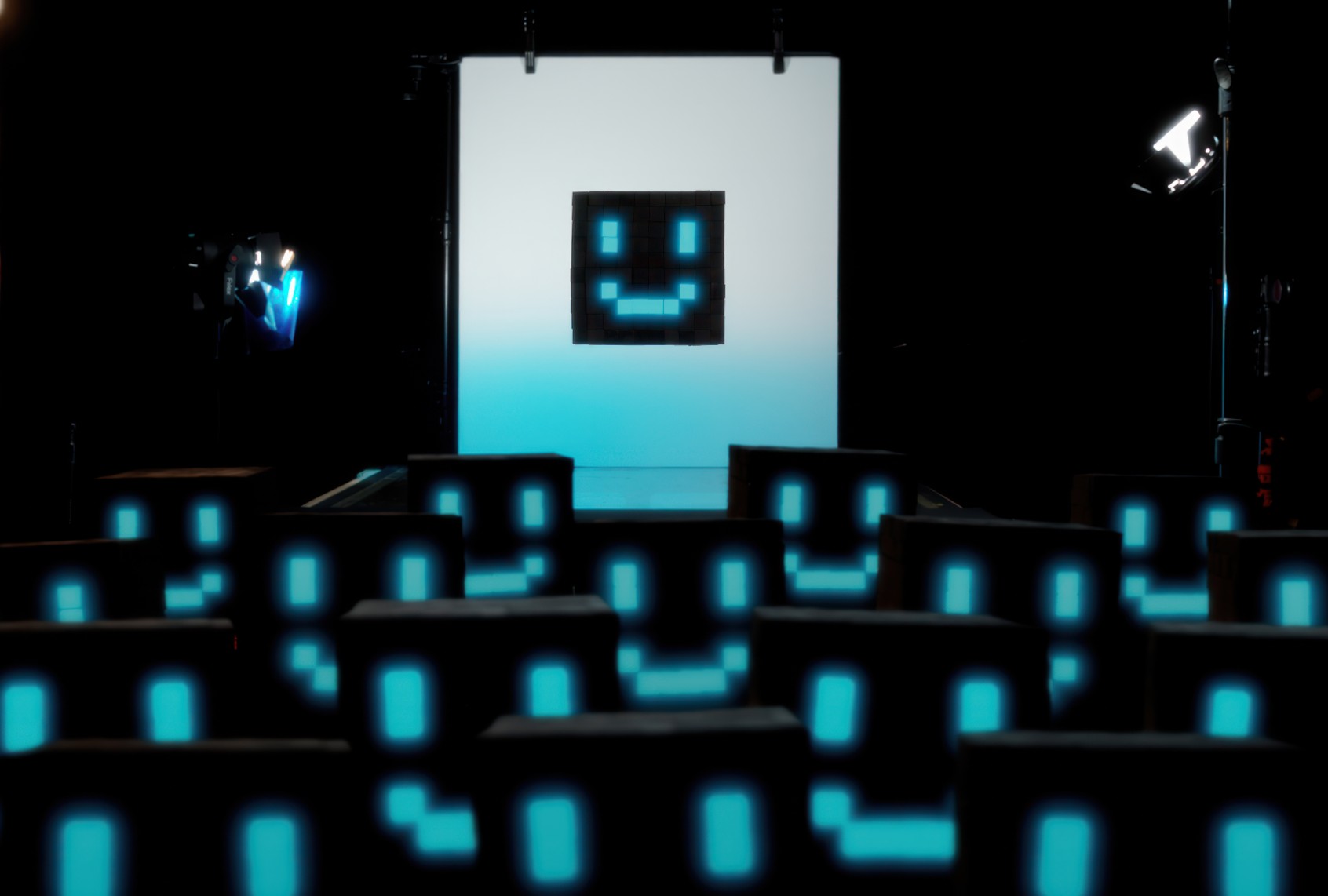
Although “The AI Doc” opens with a series of experts explaining how easily humans could lose control of creations that might come to see us as obstacles, Roher consults the accelerationists, millionaires and billionaires to a person, to give him a reason to live. Good thing, too, since they see nothing but a marvelous, AI-assisted future.
(Focus Features) “The AI Doc: Or How I Became an Apocaloptimist”
One of them, XPrize & Singularity University founder and chair Peter H. Diamandis, just launched a $3.5 million fund to promote optimistic sci-fi films to counter the AI doomsday narrative. Among the fund’s backers is Google. And Roher theatrically portrays his relief at hearing their prediction of nothing but blue skies ahead, only to be plunged back to reality by the likes of Dr. Timnit Gebru, who warns him that misleading the public about AI’s full capabilities and costs allows such men to evade accountability.
The problem, says another, is that we can’t separate the promise of AI from its perils, which is precisely what Valerie finds to be true in this brave new world of her show.
Want more from culture than just the latest trend? The Swell highlights art made to last. Sign up here
The current “Comeback” storyline is the brighter side of the “AI Doc” coin in that Al’s glitches are surreal and hilarious at worst. Hiccups can be sorted by humorless tech boys (one of whom is played by Kudrow’s son, Julian Stern), eager to make their bro masters happy regardless of what that means for the show’s quality. If putting in their time gets them a house, that’s tight.
As the season goes on, the list of reasons for “How’s That?!” to faceplant rivals the length of a CVS receipt; perversely, the odds that it’ll be a hit improve. The network’s boss (Andrew Scott, the vision of a heartless villain in an executive’s tailoring) is just pleased to be producing a series with a name-brand star made by a “writer” who never questions him and is willing to work at all hours.
But in its way, AI also brings out the better angels of Valerie’s nature in the face of such callousness. If the show’s dire assessment is that all working artists should be grateful to earn a paycheck doing something they love, it also champions the value of the human touch in a machine-driven environment. This may be Valerie’s last “Hello, hello, hello” in the spotlight, but she’s not bowing out without trying to leave a few fingerprints, letting whoever comes next know that humans once made Hollywood sparkle before machines rendered that magic obsolete.
“The Comeback” airs at 10:30 p.m. Sundays on HBO and streams on HBO Max. “The AI Doc: Or How I Became an Apocaloptimist” opens in theaters on Friday, March 27.
Read more
about this topic


